My 10 preferred quotes on leadership


Leading is about trying to become a better person than who you are at the moment, and helping others discovers who they really are.

According to Jonas Falk, The CEO of OrganicLife, “Leadership is the ability to take an average team of individuals and transform them into superstars. The best leader is the one who inspires his workers to achieve greatness each and every day.”

Here are my 10 preferred quotes on leadership. Read it carefully, let it inspire you, motivate you and empower you to become the best leader you can be.

  1. “As we look ahead into the next century, leaders will be those who empower others.” – Bill Gates
  1. “When people talk, listen completely.” — Ernest Hemingway
  1. ” Education is the mother of leadership.” — Wendell Willkie
  1. “Leaders don’t inflict pain, they share pain.” — Max Depree
  1. “Whatever you are, be a good one.” — Abraham Lincoln
  1. “Become the kind of leader that people would follow voluntarily; even if you had no title or position.”–Brian Tracy
  1. “A good leader leads the people from above them. A great leader leads the people from within them.”– M. D. Arnold
  1. “Leadership is not about titles, positions, or flowcharts. It is about one life influencing another.” — John C. Maxwell
  1. “Leadership is lifting a person’s vision to high sights, the raising of a person’s performance to a higher standard, the building of a personality beyond its normal limitations.” — Peter Drucker

10. “Earn your leadership every day.” — Michael Jordan

Feel free to add your own quotes and contributions. Don’t forget to like and share with your friends and family.

Follow my Blog: http://temitopeadelekan.com

LinkedIn connect: Temitope Adelekan

Twitter: @taymethorpenj

Thank you.

7 Tips for Online Marketing on a Tight Budget | Gerald A. Pimpleton


7 Tips for Online Marketing on a Tight Budget | Originally posted by Gerald A. Pimpleton on WordPress blog.

7 Tips for Online Marketing on a Tight Budget

The World Wide Web is a tool with infinite possibilities. Creating and maintaining a business presence through online marketing is more practical than ever before. In fact, online companies are popping up out of the woodwork. However, I can vouch that sustaining a successful online business is easier said than done.

With the immense amount of information on the Internet and users largely having the control to view exactly what they want, getting your product in front of potential customers can be challenging to say the least. Over the years, I’ve learned a lot about what works (and what fails terribly) when it comes to marketing online. Today, times are tough. Most companies have little room left in their tight budget when it comes to marketing. Here are 7 tips to follow to develop a successful online marketing strategy on your startups limited budget.

Know your market.
Your marketing strategy will never be successful if you do not have a clearly defined audience. Before you spend a dime on marketing, figure out your target market first. There’s no need to pay top dollar to hire a fancy market research firm. If you know your product, you should be able to figure out your market yourself. For example, who will be most interested in your product? Men or women? What is their age group? What are your customer’s interests? What is their likely financial situation?

Once you have a thorough profile of your customer, determining how and where to reach them is much easier. This step may take awhile, and that’s OK. If you start marketing before you have a clear customer profile though, you will likely be wasting your dollars in places that will never reach your customer. Just because Pinterest is growing rapidly, doesn’t mean your audience is the one making it grow.

Set and reset goals.
Determine what you are looking to gain from online marketing. Increased awareness? Increased revenue? You will probably have multiple goals, but keep track of what they are so you can measure your success. When you reach your initial goals, set new goals so your company can continue to improve.

Set a budget.
Now that you know who your target market is and have set goals, plan your budget accordingly. The good thing about online marketing is that you can be successful even when on a tight budget. A lot of platforms are available at no charge. However, sticking solely with free forms of online marketing might not be the best strategy for your company. Carefully determine what outlets are most necessary for your product and be willing to spend some money to get results.

Brand yourself.
Set yourself apart from the competition. There are thousands of companies trying to sell products on the Internet. Thus, you need to make your brand unforgettable. This begins with your website. Your domain name should be your company’s name if at all possible. If there are other companies online with names similar to yours, you may even want to consider changing your name to one that will not be easily confused with another product. Acquiring a domain name has a fee involved, but using a hosting service is very affordable even for the smallest budgets.

The way you want your brand to be viewed by customers is really up to you. But once you figure it out be consistent and stick with it. Having a professional website and a strong social media presence is important here, but you should also take the time to interact with potential customers and build relationships with them. The main cost involved in this step is just the man hours put into the process, which will drastically be reduced when you’ve established your brand.

Search engine optimization.
When someone enters a search query into a search engine about something relevant to your company, obviously you want to be one of the first results displayed. So how do you make this happen? Essentially, you need to make your website more appealing to search engines. Do this by using keywords that are commonly searched, backlinking your site, customizing the headline and description, etc.

SEO can admittedly be a complicated and time consuming process, however the time needs to be spent here to ensure your website is getting found. Your best bet is usually going to be spending a bit more of your budget and hiring the right people to do the proper research. At Ciplex, we stress the importance of not including keywords to simply rank your site, but using the terms your audience is looking for. That is what will get you the highest conversion rates.

Blogging.
The more content on your site, the more opportunities there are for search engines to pick it up. Blogging can be a great (and free!) way to generate leads and links into your site. But don’t just be producing content to produce content. Write quality blog posts that will engage the readers. Guest blogging on more established blogs is another way to get more traffic to your own site.
online marketing
Social media.
Don’t just sign up for these services and then forget about them. Start being active on social media. These sites should be used to promote your blog posts and communicate with customers. However, most people don’t follow companies on social media unless the company gives them a reason to. So, of course, give them a reason!

If you enjoyed this post please like and share. I’m interested to know if you have used any of these methods and how have they worked for you! Share with us in the comments below. Don’t forget to subscribe to our website and this blog!

Make Your customers Happy


Customers are seen as the genesis of any business. According to the statistics published by Small Business Administration (SBA), within the first five years more than half of small businesses fail and a third survive ten years or more. One of the key factors that can cause the downfall of an organisation is customer dissatisfaction. This makes it essential for organisations to constantly try to satisfy and meet the demands of their customers. Knowing that customers can either be internal or external, organisations need to have appropriate plans in place to meet the needs of the types of customers that we have which will in turn lead to improved customer satisfaction.

Above is an infographic on how to Increase customer satisfaction and make customer happy. Infographic published originally by Leah Norris on Creditdonkey.com

Follow my Blog: http://temitopeadelekan.com

Linkedin connect: Temitope Adelekan

Twitter: @taymethorpenj

Thanks for reading. Fell free to share your thought.

5 Key points to remember when planning SharePoint Migration


A new era has begun in collaborative working with the arrival of Microsoft SharePoint. This feature-rich platform is available as on-premises deployment and via cloud services. MS SharePoint has many cutting-edge features for collaboration, document sharing, and content management which can help organizations change their traditional ways of sharing files and exchanging public folders into a more robust platform.

With the intervention of MS SharePoint, one can create intranet portals for information sharing, enterprise search, and content management in the organization. In addition, one can create custom views and combine MS SharePoint with MS Office for more effective content management and document sharing abilities. SharePoint can be used to provide extranet portals and public websites. It also improves coordination between employees and reduces collaboration costs considerably. Below are the key points to remember when considering sharepoint migration.

Five key points to remember when planning SharePoint Migration

While moving data from file servers to SharePoint, the organizations have many things to keep in mind such as:

  1. Know the SharePoint platform very well

It may not be a wise decision if the organization decides to migrate to SharePoint just because all other organizations are doing so. Before migration, advantages and limitations of SharePoint should be studied very well. Check first if this new platform is going to benefit the organization. To know more about SharePoint, one can gather information from Microsoft sites, expert articles, case studies e.t.c. It would be a great idea to consult or work with a SharePoint experts for a positive outcome when planning for your next migration.

  1. Define and establish the goals of migration

Decide on what the organization intents to achieve by moving to SharePoint. The infrastructure costs, return on investment, and future maintenance costs are some of the important factors that need to be considered before the migration. Decide on what suits best for the functioning of the organization—on-premises deployment or cloud service. It’s not necessary to move all the data to SharePoint. Ideally data that is required for collaboration only need to be migrated. Analyze the data and decide on how much of it needs to be moved to the SharePoint, and plan the SharePoint infrastructure/subscription accordingly. Unused and unwanted data can be archived or deleted before migration (according to the policy of the organization). Then, find out a strategy for the migration. Plan what to migrate, when to migrate, and how to migrate. Usually for large scale migrations, professional tools are employed. So learn about some tools and find the best one for your organization. SharePoint migration solutions like LepideMigrator for documents are available for free trial.

  1. Decide on the strategy of migration

Organizations migrating to SharePoint adopt various strategies. The first approach is to move the data in small chunks. The most required data will be moved first. Also, employees who are more open to changes will be allowed to use SharePoint in the beginning. Gradually all the data will be moved (in accordance with the requirement), and SharePoint will be exposed to all employees. In a second approach, SharePoint will be implemented, but the organization will be waiting for the employees to familiarize themselves with SharePoint. In this case, the organization will be shifting to SharePoint very slowly. Another method is to perform a quick data migration to SharePoint retaining the file servers and public folders in read-only mode. After editing the data users will have to save it in the SharePoint. So users will be compelled to move to SharePoint.

  1. Anticipate obstacles and issues during the migration and after the migration

SharePoint is totally a different platform with its own architecture, permission structure, some limits and boundaries. It does not support all file names and file types. There are limitations to file sizes too. Many illegal characters and end strings are not allowed in file names and URLs. Some file types (file extensions) are blocked by SharePoint. Naturally, data migration cannot be smooth unless you change all these. During the migration server down time or connectivity issues should also be anticipated. Performing the migration with limited resources and doing it without obstructing the office working hours are also challenges. Many professional migration solutions helps you conduct pre-migration analysis so as to foresee the SharePoint compatibility issues. Tools like LepideMigrator for Documents help you deal with low resources and working hour related issues. And at last, employees adaptation to SharePoint environment is also an issue for organizations migrating to SharePoint.

  1. Understand the importance of SharePoint administration and end user training

SharePoint requires good collaboration habits and disciplined approach from users. So it is suggested to follow a well-planned methodology for everything that is performed in SharePoint. This will make SharePoint more clean and organized. Many administrators underestimate the potential of SharePoint. An organization is moving to SharePoint not just to replace file shares or public folders, but to take full advantage of its advanced collaboration and content management facilities. So, it is important to give users training so that they will be able to use the platform to its full potential. Absence of SharePoint awareness will lead to total mess in the SharePoint environment over time.

Conclusively, MS SharePoint is such an attractive collaboration platform that many organizations rush to adopt. When one stops using the old platform and embraces a new one, many unexpected challenges may arise. In other to reduce unforeseen situations, careful planning and use of migration solutions like LepideMigrator for documents can help organizations fix most of such issues.

This article was written by Ajit Singh and edited by Temitope Adelekan

Ajit Singh is a Manager – Marketing Operations with Lepide Software Pvt. Ltd. He is a positive person in every aspect of life and he believes, sharing ones expertise not only helps others in their professional endeavors but it makes the world a better place.

Follow my Blog: http://temitopeadelekan.com

Linkedin connect: Temitope Adelekan

Twitter: @taymethorpenj

Hope this is helpful and feel free to add your own suggestions and contributions.

Thank you.

Improving customer satisfaction: 5 important articles to read


Customers are seen as the genesis of any business. According to the statistics published by Small Business Administration (SBA), within the first five years more than half of small businesses fail and a third survive ten years or more. One of the key factors that can cause the downfall of an organisation is customer dissatisfaction. This makes it essential for organisations to constantly try to satisfy and meet the demands of their customers. Knowing that customers can either be internal or external, organisations need to have appropriate plans in place to meet the needs of the types of customers that we have which will in turn lead to improved customer satisfaction.

Find below the links to theses great articles:

1. The magic words customers wants to hear. Written by the staff of Entrepreneur Media, Inc posted on Entrepreneur.com

2. 7 Things customers don’t want to hear. Written by Max, posted on JitBit Blog

3. Top 16 things customers want. Written by Kevin Stirtz, posted on allBusiness.com

4. 7 Things customers want to see on your About page. Written by Gail Oliver, posted on business2community.com

5. 7 Things you should never say to your customers. Written by Amy Castro, posted on The performance communication blog

I hope this is helpful to you and feel free to add your own suggestions and contributions.

Follow my Blog: http://temitopeadelekan.com

Linkedin connect: Temitope Adelekan

Twitter: @taymethorpenj

Thank you.

Organise Your Life And Improve Productivity By Using These Free Tools.


Proper organisation of people’s day-to-day undertakings can be demanding and very challenging. Deadline difficulties, forgetting what you have to do, getting overwhelmed as a result of too much activities to process or loosing track of what you planned doing can be a major setback to human development. In most cases, this can have a negative effect on our delivery either as individual, entrepreneur, as a freelance or even in the corporate world. To avoid such setbacks, having a To-Do list can be the simple solution you need.

To-Do List is an organised and prioritised list of all the tasks that needs to be carried out. It can also be seen as a list of everything that needs to be done, with the most important assignment at the top of the list, and the least important assignments at the bottom. It can help a person stay on top of important assignments and loads of tasks or results. If you want to beat down work stress or burden, To-Do List can be a lifesaver. It can be prepared in two steps, which are:

  1. Write down your assignments clearly. If it’s a large assignment, break it down into smaller assignments. This will give more clarity and a better action plan.
  2. Read your clearly defined assignments and allocate priorities to the assignments. Don’t forget to differentiate urgency and importance when prioritising.

You can also do this by using a diary, mobile phones calendaring, Gmail, MS-word, Excel, Outlook and various To-Do Lists Apps. When used properly, one can be a better-organised person, and be much more reliable. By using a To-Do Lists, one can:

  • Remember to carry out all necessary assignments;
  • Tackle the most important assignments first, and reduce time on unimportant assignments;
  • Reduce stress on a large number of unimportant jobs;
  • Help cut down stress level;
  • Know how to prioritise;
  • Know how to be organise and focus;

And in return, one would develop the habit of adding value on time and be more productive.

Nowadays, planning projects (e.g. Home projects, planning a party, planning finances, school projects, planning a trip, self improvement program, time management, exercise program, shopping lists to name a few) on a paper based to-do list can be a daunting task. Not even in this modern day where technology adoption rate and awareness keeps increasing on a daily basis. Using a free To-Do Lists Apps can help us simplify the process of having to manage so many sheets, re-writing or trying so hard to assign assignments. To-Do List Apps are more efficient, can save time and can help prioritise easily. These To-Do List Apps are useful but to maximise its uses, one must be self-disciplined.

Below are 10 free To-Do List Apps that can help us plan, organize, manage our daily activities easily and deliver on-time results.

  1. GTasks – is a simple and efficient to-do / task management app with Google synchronization. You can customize your to-do list, set reminder, share tasks with your friends, family members or colleagues and sync with your Google Tasks perfectly. With it, you will never miss a task and focus on what really matters to boost productivity.
  1. TickTick – is a simple to-do list app, which helps you to get all things done and cloud sync tasks. It is cross-platform, available for Android (UI suitable for tablet also), iOS, Chrome Extension and web. With TickTick at hand, you can organize your life in an easier way.
  1. Remember The Milk (RTM) – Take your to-do list anywhere with this feature-packed app; never forget the milk (or anything else) again. Trust me, you can do more than not just to forget the milk (hehehe). Remember The Milk (RTM) for Android connects with the popular online service of the same name. With millions of users worldwide, Remember The Milk is everywhere you are: from your phone, to the web, to your Google apps, and more.
  1. Toodledo – is an incredibly powerful tool to increase your productivity and organise your life. More than just a to-do list, Toodledo provides you with a place to store your notes, outlines and habits. Access your data on any device or browser.
  1. Todoist – Join the 4-million+ people around the world who are accomplishing amazing things with Todoist – the beautifully simple to-do list and task manager built for the pace of modern life. Whether you need to collaborate with your team, keep track of your most important projects, or just remember to pay the rent, Todoist is there to help you achieve more every day.
  1. Pocket Lists – is an amazing universal to-do list app for iPhone and iPad for managing checklists, focusing on important to-dos, reminders, and sharing your checklists with friends. Pocket Lists app understands your input and automatically sets a reminder according to what you typed.
  1. Wunderlist – helps millions of people around the world capture their ideas, things to do and places to see. Whether you’re sharing a grocery list with a loved one, working on a project, or planning a vacation, Wunderlist makes it easy to share your lists and collaborate with everyone in your life. Wunderlist instantly syncs between your phone, tablet and computer, so you can access your lists from anywhere.
  1. do – Millions around the world use Any.do to capture ideas, things to do, and collaborate with the people around them. From planning your next vacation to organising a big project at work or sharing a grocery list with a loved one, Any.do makes it easy to keep your life organized in one place. Any.do seamlessly syncs between your mobile, desktop, web and tablet so you, and everyone around you, can access it from anywhere.
  1. Workflowy – is the world’s best tool for taking notes and making lists. It can be use to be more creative and productive. It is simple to use and incredibly powerful. WorkFlowy can help you manage all the information in your life. If you’re the kind of person, who fills notebooks and notebooks with ideas, projects, objectives and brainstorms, then you should get your hands on Workflow.
  1. Planner – is the user-friendliest App that helps you plan better and manages your goals and projects, get focused and accomplish goals much faster than any other method. This App is excellent for personal, business and academic goal setting and task management.

Hope the list would help you improve on the way you manage your day-to-day activities or upcoming projects either in the corporate world or personally. Feel free to share and thanks for reading.

Follow my Blog: http://temitopeadelekan.com

Linkedin connect: Temitope Adelekan

Twitter: @taymethorpenj

Reference: Google Play 2015. Retrieved from https://play.google.com/store

13 fun things you didn’t know Siri could do


This awesome software acquired by Apple Inc. in April 28, 2010 called “Siri” which works as an intelligent personal assistance and knowledge navigator has since then changed the way we use our Apple products. I have heard about Siri and what it can do but not until I came across this great article written by Steven Tweedie from Business Insider titled 13 fun things you didn’t know Siri could do as published on Entrepreneur. One of the fun things I can now do with my Siri is to have a to-do list that comes with a reminder whenever I want it. Do you know that? If you are interested in knowing the additional fun things you can do with your Siri, Click here.

Follow my Blog: http://temitopeadelekan.com

Linkedin connect: Temitope Adelekan

Twitter: @taymethorpenj

Hope this is helpful and feel free to add the other things you can do with Siri that is not on the list.

Thank you.

6 Business Books That Will Revolutionize Your Business and Change Your Life


I am passionate about any thing relating to entrepreneurship. Coming across this article written by Kimanzi Constable about 6 business books that can change your business and life got me excited and couldn’t wait few more seconds before reading further. I was happy to have found two of my greatest business books on the list. “Susan Baroncini-Moe – The fire path and Seth Godin – The Dip”. I must confess these are life-changing books and I would recommend these books any day. Although, I haven’t heard of the other four books and I wouldn’t mind giving it a try. How about you? Have you read or heard about any of these great books? What are your thoughts about these books? Which book did it for you? Your addition to the list is important and your suggestion can help budding entrepreneurs get better at what they do.

Click here to access the full article and please do share your views in the section below this post. Also, follow my blog to get resourceful information that can help any organisation stay competitive, innovative and profitable (The follow button is at the bottom of this page) or send me a message directly.

EMAIL Temitope Adelekan

LINKEDIN https://ng.linkedin.com/in/temitopeadelekan

FOLLOW me on Twitter http://www.twitter.com/taymethorpenj

HOW TO CREATE A S.M.A.R.T GOAL


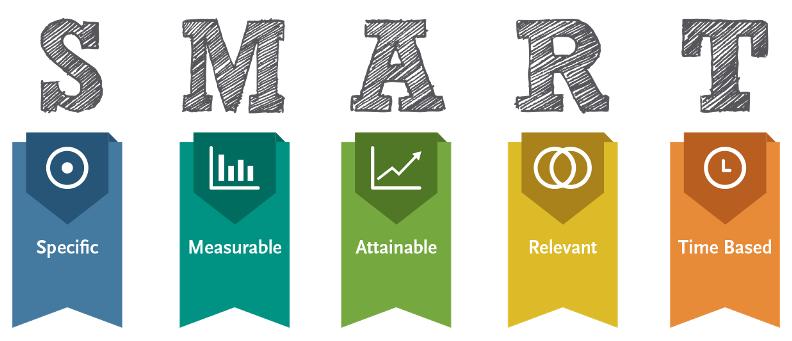
A goal is a desired result that a person or a system foresees, plans and promises to achieve. According to Bill Copeland, “The trouble with not having a goal is that you can spend your life running up and down the field and never score.” In order not to end up like bill have said, it is good to have a goal and at the same time set the right goal. If you don’t know where you’re heading, you’ll never get there. Therefore, it is imperative to always set or create a S.M.A.R.T goal instead of a broad goal. S.M.A.R.T goal means creating a Specific, Measurable, Achievable, Realistic and Time-bound goal. The S.M.A.R.T model is an effective process if adopted in any business or by any individual; it can help in achieving those set goals in a faster and extraordinary way. Below are the 5 S.M.A.R.T acronyms to guide you in order to attain any set goals both in your individual life and in your business.

1

  • Specific – Be Specific

Is it specific? A specific goal is a simplistically written and clearly defined goal. This is where you asked most of the questions in order to know what to do e.g.

Who? Who is involved?

What? What do I want to accomplish?

Where? Identify a location.

When? Establish a time frame.

Which? Identify needs and limitations.

Why? Specific reasons and benefits of accomplishing the goal.

The aim of asking the questions is to make your goal more specific. This can help you differentiate a broad goal from a specific goal. The more specific your goal is, the higher the chances of accomplishing the goal.

Example:

I want to own a Benz S600. – Broad

I will put 40% of my income in savings for the next 15 months and talk to a car dealer. – Specific

2

  • Measurable – Have a tangible set of principles for measuring progress in meeting your set goals.

Is it measurable? A goal without a measurable outcome is like driving a car without speedometer. Measuring your progress will help you stay on track, reach your target set dates and accomplish your goal. The best way to know if your set goal is measurable is by asking questions like:

How far?

How many?

How will I know when my goal is accomplished?

What is at the destination?

Depending on the type of goal, set a reminder either weekly or monthly that will help you measure your progress. A smartphone calendar is a good tool to use, an office board or a notepad.

Example:

I intend to loose weight by joining the gym class. – Not measurable

I intend to loose 30lbs by attending the gym class 12 times a week. – Measurable

 3

  • Achievable

Is your goal achievable? Goals should be achievable. Centered on your present limitations e.g. schedule, workload, skills, and knowledge required to achieve your goal, do you believe you can achieve your set objectives? If its not visible, then set a different goal, one that is realistic for you in the present. Questions below can help you set an achievable goal: –

Are you ready to make the pledge to achieve your target?

Do you have what it takes to achieve your set goal?

Are you willing to at least tweak some aspects of your life?

Is there a more achievable target you are keen to work for?

 You can meet practically any goal when you plan your steps intelligently and establish a timeframe that allows you to carry out those steps. When you outline your goals you develop your self-image. This will make you to start seeing yourself worthy of your set goals, and develop the personality that allow you to possess them. Always remember that achievable goals motivate and impossible goals de- motivate.

Example:

I need to draw a proposed plan for my new building.

For this goal to be achievable, you must have a skill set (that of an architect) which allows you to understand the nature of your goal. Also, the goal must be challenging for you to remain interested in and dedicated to achieving it.

4

  • Realistic

Is it realistic? A realistic goal should be sensibly measured against which you are both willing and able to work on. In business, goals should be measured against business model, mission statement, market, client base, industry and even your specific position within the organisation. Ask yourself the questions below:

Am I capable of achieving this goal?

Am I prepared to work for this goal?

Is this a primary or secondary goal?

 You alone can decide just how high your goal should be. Be sure that every goal denotes a significant progress. A high goal is often easier to attain as compared to a low one because it exerts low motivational energy.

Example:

If your expertise were in Marketing, it would be unrealistic to set a goal for hiring employees within an organisation you manage. That would be more appropriate for someone in the Human Resources department to set.

5

  • Time-bound

Is it time-bound? Every goal needs a deadline. A deadline set to achieve a goal reminds us of the urgency and possibly the time required to spend on each steps or process of the goal. Deadline strengthens the importance of the goal in your mind. It motivates you to act on your set goals. When you don’t set a timeframe for your goals, there would be no motivation or internal force to accomplish the goal, so it gets buried in the hole. Knowing how imperative time is in achieving your goal, after you might have set the required timeframe, ask yourself the below questions:

What can I do today to achieve my goal?

What can I do 1 month from now to achieve my goal?

What can I do 3 months from now to achieve my goal?

Is it manageable?

Don’t forget to consider all of your urgencies and time limitations and please remember to set a realistic goal. If external forces (PESTLE) are making the deadline unrealistic, then look at ways to change the strategy for completion. E.g. outsourcing some tasks associated with the goal might help.

Example:

I need to create an ecommerce website for my fashion store. Not time-bound

I need to create an ecommerce website by the end of June 30th 2015 starting from today Jan 30th 2015 (5months). Time-bound

In conclusion, everyday from young to adult, we set goals daily. Might be to get the car fixed, might be to buy a new car, might be to own a startup, might be to buy a new house by the end of 2015 or might be to get enrolled in choice schools. It’s never too late. Ask yourself the below questions:

What is my goal?

What am I doing about my goal?

Is my goal S.M.A.R.T? 

Below is a sample questionnaire that can serve as a guide to help you achieve those goals in a distinct and timely way.

The S.M.A.R.T. Goal Questionnaire

Have you a GOAL? If yes, ask yourself the below questions:

Specific: What will the set goal achieve? What is the required end result? How and why will it be achieved? ————————————————————————————

Measurable: How will the set goal be measured? What are the necessary steps required to attain success? How will I know when the goal has been accomplished? ————————————————————————————————————————

Achievable: Do you have the skills needed to achieve the goal? What are the possible barriers? ——————————————————————————————————-

Realistic: Have you the resources required to accomplish the set goal? If not, what is needed and is it realistic? ———————————————————————————

Time-bound: Does the goal have a timeframe or urgency attached to it? Are there any deadline limitations? Can progress be checked? Is there a reasonable sense of urgency to reach the goal? ——————————————————————————-

Do the Math – the final written goal: – Is it simply and clearly written? Is it S.M.A.R.T.?

Follow my Blog: http://temitopeadelekan.com

Linkedin connect: Temitope Adelekan

Twitter: @taymethorpenj

Thank you.

LinkedIn Tips: 5 Big Mistakes You Must Stop Doing


Through smart networking, one can solve the most complex issue. This is one opportunity made available to the public by Jeff Weiner. Below is an article written by Ricardo Casas titled LinkedIn Tips: 5 Big Mistakes You Must Stop Doing.

Click here to access the article and please do share your views in the section below this post. Also, follow my blog to get resourceful information that can help any organisation stay competitive, innovative and profitable (The follow button is at the bottom of this page) or send me a message directly.

EMAIL Temitope Adelekan

LINKEDIN https://ng.linkedin.com/in/temitopeadelekan

FOLLOW me on Twitter http://www.twitter.com/taymethorpenj