
How to Build a Career or Business Around Your Passion for Personal and Professional Fulfilment


Turning your passion into a career or business can be both exhilarating and daunting. It is not just about doing what you love – it is about aligning your interests with practical steps that create lasting satisfaction and impact. The journey requires introspection, experimentation, and perseverance, but it can yield personal and professional fulfilment when approached thoughtfully. Many struggle with knowing where to start or how to validate their ideas, leading to stagnation or frustration. By following a structured approach, you can transform your passion into a sustainable career or business.

Reflect on Your Core Values and Strengths

Before taking action, it is crucial to understand yourself deeply. Reflect on what matters most to you, the skills you excel at, and the areas where your passion naturally aligns with your strengths. This self-awareness helps ensure your pursuits are authentic and sustainable, rather than driven solely by external expectations or trends. Mapping your values against potential career or business paths can reveal opportunities that not only excite you but also fit your personality and work style. By anchoring your decisions in your core values, you create a foundation for long-term satisfaction and resilience. For instance, someone who values creativity and autonomy might realise they are best suited to freelance graphic design rather than a corporate marketing role.

Validate Your Passion with Market Demand

Passion is important, but it must intersect with real-world demand. Consider whether others would pay for or engage with what you love to do. Research potential markets, observe competitors, and see if there is a clear audience for your offering. This validation step prevents wasted effort and provides confidence that your efforts can produce tangible results. Testing small experiments or side projects can reveal early signals of viability, helping you adjust your approach before fully committing. A former teacher, for example, tested a tutoring side hustle online and quickly found a steady stream of clients, confirming strong demand before transitioning full-time.

Leverage Education to Accelerate Your Journey

Structured education can provide a powerful boost when transforming a passion into a viable career or business. By earning an MBA, you gain access to practical management, strategy, and leadership skills that complement hands-on experience. The curriculum also offers decision-making and problem-solving frameworks that directly apply to entrepreneurial or career pursuits. Beyond skills, an MBA program opens networking opportunities with peers, mentors, and industry experts who can accelerate growth. Explore job opportunities with an MBA to learn more. One aspiring entrepreneur used insights from an MBA capstone project to launch a niche fitness startup that now serves thousands of customers.

Develop Relevant Skills and Knowledge

Even when you are passionate, success requires mastery. Identify the skills and knowledge necessary to excel in your chosen field and make a plan to acquire them. Continuous learning – through courses, mentorship, or practical experience – ensures you remain competitive and capable of delivering real value. Building expertise also instils confidence, which is crucial when taking risks or entering unfamiliar territory. By committing to skill development, you increase both your marketability and the likelihood of long-term satisfaction. A hobbyist photographer, for example, began taking online lighting courses and quickly turned her side passion into a thriving portrait business.

Start Small and Scale Gradually

Launching a business or career based on passion does not require an immediate full-scale operation. Begin with manageable projects or pilot programs to test your ideas, gather feedback, and learn from experience. This approach allows you to iterate, refine your offering, and minimise risk. As confidence and understanding grow, you can scale gradually, expanding your reach and capabilities without overextending yourself. Incremental growth also gives you time to develop supporting systems, networks, and resources for long-term sustainability. A software engineer started by offering weekend coding workshops at local libraries before eventually opening a full-fledged online education platform.

Embrace Resilience and Adaptability

The journey will inevitably include setbacks, uncertainty, and moments of doubt. Cultivating resilience allows you to recover from failures without losing momentum, while adaptability ensures you can pivot when circumstances change. These qualities enable you to navigate shifting market conditions, feedback, and evolving personal priorities. Developing emotional intelligence, maintaining a growth mindset, and staying flexible are key strategies for sustaining energy and focus over the long term. Resilient, adaptable individuals are better equipped to turn challenges into opportunities. After her first café location closed during a downturn, one entrepreneur shifted to a mobile food truck model and found even greater success.

Seek Support and Build a Network

Even the most independent ventures benefit from connection. Mentors, peers, and collaborators can provide guidance, accountability, and encouragement. Networking opens doors to opportunities you might not find alone and allows you to learn from others’ experiences. Engage with communities in your field, attend events, and cultivate meaningful relationships. A strong support network helps you overcome obstacles and enriches your journey, offering perspectives that strengthen both personal growth and professional decision-making. One software founder credits their business growth to a weekly mastermind group that helped troubleshoot technical challenges and refine product strategy.

By taking a structured approach – reflecting on your values, validating your ideas, leveraging education, building relevant skills, starting small, embracing resilience, and seeking support – you can transform your passion into a career or business that is both fulfilling and sustainable. Each step strengthens your foundation, reduces risk, and increases the likelihood of achieving lasting satisfaction. Pursuing a passion-driven path is a marathon, not a sprint, but with patience, reflection, and deliberate action, it can become a profoundly rewarding journey.

Elevate your academic path with perspectives rooted in resilience, balance, and cultural awareness. Explore Knowledge Vault now and start transforming your learning journey through meaningful engagement.

Feel free to share this post on social networks.

Want to submit a blog post: Share a blog post

Twitter: @taymethorpenj

Brought to you by Gloria Martinez

Edited by Temitope Adelekan

What Makes a “Good” PhD Student? Lessons from New Zealand and Beyond


Five years post-PhD, I reflect on the question: What makes a good PhD student? Pursuing a PhD is not just a transformation, but a test of endurance, independence, and intellectual curiosity. It requires more than just academic intelligence. In New Zealand, where I earned my doctorate, the doctoral journey is shaped by bicultural values, unique funding models, and independent research pathways. While universities worldwide often emphasise high grades, research ability, and independence, the reality is that a good PhD student is someone who can navigate complexity, build meaningful relationships, and sustain their wellbeing over time.

In this short article, I explore what being a good PhD student means and how do we challenge the biases often embedded in that question?

1. Independence, Wellbeing, and Balance

New Zealand PhD programmes are generally structured around independent research rather than coursework-heavy models found elsewhere. Students are expected to work autonomously, define their research goals, and proactively seek guidance. A uniquely New Zealand view of wellbeing is offered by Mason Durie’s Te Whare Tapa Whā model, which sees wellbeing as a balance of four dimensions: taha Wairua (spiritual), taha Hinengaro (mental), Taha Tinana (physical), and taha whānau (social). PhD students who maintain balance across these areas are more likely to sustain productivity and avoid burnout. For example, a friend, a former PhD student in sociology, developed her own community-engaged project with Pacific youth in South Auckland. She initiated relationships with stakeholders, co-designed interviews with community groups, and adjusted her methodology to respect cultural protocols.

What you can do: Learn to manage your time and set research goals independently. Use tools like Gantt charts or Notion to track your milestones and check in with your supervisor regularly, even if you don’t have to. Also, make time for community events, spirituality or meditation, physical activity, and relationships outside academia.

2. Cultural Competence and Responsiveness

In the context of Te Tiriti o Waitangi and a growing commitment to equity, diversity, and inclusion, PhD students in Aotearoa are increasingly expected to demonstrate cultural competence, particularly in engaging with Māori and Pacific communities. Good PhD students in New Zealand engage with culturally responsive practices, recognising that research is not just an intellectual process, but also a cultural and ethical one. For example, a known PhD student at a University in Auckland incorporated te ao Māori principles into their education research, learning tikanga and consulting with iwi partners throughout their project. This led to meaningful collaborations and more ethical research outcomes.

What you can do: Engage with the university’s cultural support services, learn the research ethics specific to Māori and Pacific communities, such as Māori or Pacific student support teams, and attend relevant workshops or visit the marae or fale. Consider how your research reflects or contributes to bicultural practice.

3. Critical Thinking (Including Self-Critique) and Intellectual Curiosity

A good PhD student asks what they are researching, why it matters, who it benefits, and how power operates through their methods. This goes beyond a literature critique; it’s also about recognising one’s positionality and biases. In New Zealand, critical thinking also includes challenging dominant Eurocentric paradigms and being open to Mātauranga Māori (Māori knowledge systems), Pacific knowledge frameworks, and non-Western epistemologies. For example, a PhD friend in public health at the University of Auckland revised their framing after realising their original design unintentionally marginalised Māori health narratives using a Eurocentric care model.

What you can do: Attend interdisciplinary seminars, join reading groups and read widely outside your discipline. Use reflexivity journals to reflect on how your values, background, and assumptions shape your work. Seek feedback from diverse supervisors to deepen your thinking.

4. Resilience and Adaptability

No PhD journey is linear. Research directions change, fieldwork gets cancelled, or publications get rejected. In New Zealand, the small size of academic networks can also create challenges around supervision changes or limited departmental support. One of the most important predictors of PhD success is the quality of the student-supervisor relationship. Power dynamics, especially across race, gender, and class lines, can hinder open communication. Students may fear “rocking the boat,” particularly in hierarchical departments. A good PhD student knows how to manage this relationship professionally, assert their needs, and seek clarity when expectations are unclear. For example, a PhD candidate whose international fieldwork was cancelled due to border closures during COVID-19 successfully pivoted to a digital ethnography using Zoom-based interviews and online forums.

What you can do: Supervisors may equate silence with competence. So, it is crucial to set regular check-ins with your supervisor, document meetings, set agendas ahead of time, and consider asking for a second supervisor where one is not already in place or get a mentor if needed. For example, many students from collectivist cultures may feel hesitant to speak up. This can lead to miscommunication and missed opportunities. Therefore, build a strong support network outside your primary supervisor, including peers, postgraduate advisors, join postgraduate networks like PGSA or departmental research groups, and professional development services like those offered by career and employability services, campus life, etc. Using setbacks as learning opportunities while on this journey is also important.

5. Good Communication Skills (Not Just Academic Writing)

Being able to articulate your research to diverse audiences, including community stakeholders, funders, or students, is a major asset. This is especially important in New Zealand due to the emphasis on public-good research and engagement. For example, a colleague partnered with a regional council to translate climate research into local policy briefs and infographics. Long story short, their work contributed directly to regional planning initiatives.

What you can do: Take advantage of workshops like ThesisLink, competitions like the 3MT (Three-Minute Thesis), and your provisional year review examination to hone your public speaking and storytelling skills.

This next part will focus on unpacking the biases surrounding What a Good” PhD Student looks like.

Unpacking Common Biases: What a “Good” PhD Student is “Not”

From experience as a student and professionally, too often, implied biases distort our understanding of what makes a Good PhD student. To keep this writing short, here are common myths that deserve challenging:

Myth 1: A good PhD student publishes early and often.

While publication is valuable, not all disciplines prioritise early publishing, and it is also worth noting that students are on different career levels and pathways. In kaupapa Māori or community-based research, building trust and doing ethical research can take longer than the publishing cycle permits. Note, output is not always a reflection of capability.

Myth 2: Full-time, fully funded scholarship students are the most committed.

In reality, many excellent candidates work part-time or full-time (one of the benefits of doing a PhD in New Zealand – open work rights with no limitation) and have no scholarship awarded to them. According to Universities New Zealand, approximately 43% of doctoral candidates in 2023 were international, with international students comprising about 57% of all PhD graduates, and many juggle financial, immigration, and family pressures alongside study.

Myth 3: Fluent academic English is a must.

Academic excellence is not limited to linguistic fluency. Many students whose first language is not English contribute deeply through theoretical insight, technical expertise, and global perspectives. In addition, universities often provide editing and writing support to students, no matter your background. That said, do not confuse fluency with intelligence.

Myth 4: A good PhD student works in isolation.

The stereotypical image of the lone intellectual is outdated and unhelpful. In New Zealand, collaborative work is highly valued, especially with communities, iwi, hapū, or industry partners. Being able to seek feedback, build research relationships, and contribute to team environments is essential.

Myth 5: A good PhD student never questions their supervisor.

Healthy, constructive disagreement is often part of intellectual growth. Good supervision relationships in New Zealand are increasingly built on mutual respect and open dialogue. Supervisors expect critical thinking, not passive agreement. With that said, always read the room and don’t make this a chore.

Myth 6: A good PhD student must study full-time and finish in 3 years.

Life circumstances, funding challenges, caregiving responsibilities, or health may make part-time or extended study the only viable option. However, the part-time option is not available to international students. In fact, some of my Māori, Pasifika, and first-generation doctoral friends follow non-linear study paths and still produce excellent research.

Myth 7: A good PhD student has a clearly defined project from the start.

Many students, particularly in qualitative fields, refine or even pivot their research questions after months or years of reading, engaging with communities, or conducting fieldwork. Adaptability, not rigidity, often produces better scholarship.

Myth 8: A good PhD student is young and recently graduated.

There is no “ideal age” for starting a PhD. Many outstanding PhD candidates in New Zealand are mid-career professionals, parents, or retirees. Their lived experience often enriches their research depth and societal impact.

Myth 9: A good PhD student should avoid “non-academic” work.

Industry collaboration, teaching, advocacy, community work, and even casual jobs can build valuable skills and inform research. In New Zealand’s tight academic job market, these broader experiences often make candidates more employable and grounded.

Recognising Shared Responsibility: What Supervisors and Institutions Can Do

While much attention is given to how PhD students can improve, succeed, or “measure up,” it is equally important to acknowledge that success in a doctoral journey is a shared responsibility. Supervisors, academic departments, and institutions play a critical role in shaping supportive environments where diverse candidates can succeed. Institutions, for instance, are responsible for enabling good research environments and meeting their pastoral care code obligations. Beyond academic guidance, this involves promoting culturally responsive supervision training (e.g., Ako Aotearoa frameworks), ensuring transparent feedback processes, enabling funding and flexible work arrangements for underrepresented groups, and providing industry skills preparation and pastoral and mental health support.

Final Thoughts: Rethinking “Good”

Being a good PhD student is not about perfection; it is about growth, responsibility, and meaningful engagement with knowledge. In New Zealand, that also means honouring Te Tiriti, challenging Eurocentric standards, and recognising and respecting diverse ways of knowing and being. Whether starting your PhD journey or supporting someone on theirs, remember that potential is not always loud and brilliance comes in many forms. If you are a prospective PhD candidate and would like to chat about what it is like to do a PhD in New Zealand, or you are currently in New Zealand pursuing a PhD and have questions, head over to www.phdtribe.com to book your free one-to-one meeting.

References

Ako Aotearoa. Cultural Competence & Teaching Practice. Retrieved from https://ako.ac.nz/knowledge-centre/ki-te-hoe-indigenising-spaces

Durie, M. (1998). Whaiora: Māori Health Development. Oxford University Press.

Health Research Council NZ. HRC Research Ethics Guidelines. Retrieved from https://www.hrc.govt.nz/resources/hrc-research-ethics-guidelines

McAllister, T., Naepi, S., Walker, L., Gillon, A., Clark, P., Lambert, E., … & Alipia, T. (2022). Seen but unheard: navigating turbulent waters as Māori and Pacific postgraduate students in STEM. Journal of the Royal Society of New Zealand, 52(sup1), 116-134.

Ministry of Health New Zealand – Manatū Hauora (2023). Te Whare Tapa Whā – A Māori Model of Health.

ThesisLink Blog – NZ-based resource for postgraduate students. Retrieved from https://thesislink.aut.ac.nz/

Three Minute Thesis (3MT NZ). Retrieved from https://www.auckland.ac.nz/en/students/academic-information/postgraduate-students/doctoral/doctoral-opportunities/3mt.html

Universities NZ – Te Pōkai Tara. Driving research and innovation. Retrieved from https://www.universitiesnz.ac.nz/sector-research/driving-research-and-innovation

Vaioleti, T. M. (2006). Talanoa research methodology: A developing position on Pacific research. Waikato Journal of Education, 12(1). Retrieved from https://wje.org.nz/index.php/WJE/article/view/296

Feel free to share this post on social networks.

Follow my blog for more insightful articles: http://temitopeadelekan.com

Want to submit a blog post: Share a blog post

Twitter: @taymethorpenj

Edited by Temitope Adelekan

The Art of Failing: The Importance of Embracing Failure and Trying Again


We have all heard the phrase “failure is not an option,” but in reality, failure is not only an option but also a necessary part of success. That’s right! Failure is not the antithesis of success; rather, it is a pathway to success. In today’s society, failure is often seen as a negative thing. From a young age, we are conditioned to avoid failure at all costs, and those who experience failure are often stigmatised as incompetent or inadequate. But what if we approached failure differently? What if we saw it as an opportunity to learn, grow, and try again? As Noonan (2019) indicated, experiencing failure is a normal aspect of life and is crucial for achieving success if accepted. Noonan’s work provides reassurance and confidence in embracing failure as a path to success.

The concept of embracing failure and trying again is based on the growth mindset theory developed by Carol Dweck, a psychology professor at Stanford University. According to Dweck, individuals with a growth mindset believe that their abilities can be developed and improved through hard work and dedication. They see failure as an opportunity to learn and grow, rather than a reflection of their intelligence or abilities. Studies have shown that individuals with a growth mindset are more likely to persevere through challenges and achieve their goals. They are less likely to give up after a setback or a failure and are more likely to try again and learn from their mistakes.

Furthermore, embracing failure and trying again can lead to creative breakthroughs and innovation. In his book, “The Myths of Innovation,” author Scott Berkun argues that many great inventions and discoveries were the result of multiple failures and iterations. Thomas Edison, for example, famously said, “I have not failed. I’ve just found 10,000 ways that won’t work,” referring to his numerous attempts to invent the light bulb. J.K. Rowling: The author of the wildly popular Harry Potter series faced rejection after rejection from publishers before finally landing a book deal. She could have given up after the first few rejections, but instead, she kept trying until she found success. Another great example is Michael Jordan: Considered one of the greatest basketball players of all time, Jordan was cut from his high school basketball team. Instead of letting this failure discourage him, he used it as motivation to work harder and improve his skills. How about Abraham Lincoln? Before becoming one of America’s most beloved presidents, Lincoln failed at several business ventures and lost numerous elections. Despite these setbacks, he never gave up and eventually found his way to the White House.

So, what am I trying to communicate: the importance of embracing failure and trying again cannot be overstated. Failure is not the opposite of success; it is a necessary part of the journey. When we approach failure with a growth mindset, we become more resilient, more determined, and more likely to achieve our goals. Therefore, the next time you experience a setback or a failure, remember Thomas’s, Harry’s, Michael’s, and Abraham’s stories. Don’t give up. Instead, use the experience as a learning opportunity and try again.

Remember, failure is not the end of the road; it’s an opportunity to try again, learn from our mistakes, and grow. Best wishes

Feel free to share this post on social networks.

Follow my blog for more insightful articles: http://temitopeadelekan.com

Want to submit a blog post: Share a blog post

Twitter: @taymethorpenj

Edited by Temitope Adelekan

Reference: Noonan, D. (2019). Failure found to be an essential prerequisite for success. Scientific American.

A Pathway for Aspiring Entrepreneurs to Lay a Strong Foundation for Success


Venturing into entrepreneurship offers an exhilarating journey, requiring careful consideration and thorough preparation. This guide explores essential steps to help you identify the ideal business, empowering you to make informed decisions and lay a solid foundation for success. By following these critical steps from Temitope Adelekan, you’ll be equipped to navigate the complexities of entrepreneurship with confidence and clarity, setting the stage for triumph in your endeavours. Embrace the journey ahead with enthusiasm and dedication as you embark on this exciting path of entrepreneurship.

Aligning with Your Passions

Identifying a business that resonates with your personal interests and passions is vital. Engaging in a field you are deeply passionate about ensures that you find joy and fulfilment in your endeavours. This alignment significantly boosts your determination to overcome obstacles, sustaining your drive during challenging periods. Your enthusiasm for your work will be evident, attracting customers and inspiring your team, thereby laying the groundwork for a thriving business.

Crafting a Strategic Plan

The essence of a successful venture lies in a thorough business plan that sketches out your goals, identifies your target audience, evaluates competitors, formulates marketing strategies, and projects financial outcomes. This plan acts as your venture’s compass, steering your decisions and facilitating investment acquisition. It allows you to anticipate and prepare for any business scenario, ensuring a steady course toward your objectives.

Establishing Contingency Strategies

Preparing for unforeseen challenges is a hallmark of a prudent entrepreneur. By identifying potential threats to your business and devising strategies to counter them, you ensure your venture’s resilience. These contingency plans equip you to handle unexpected situations with poise, ensuring the longevity and stability of your business in the face of adversity.

Laying Financial Groundwork

Ensuring your business’s financial health is crucial for its success, with adequate capital as a key pillar. Your credit score plays a vital role in accessing diverse financing options, making it essential to aim for a high score to secure loans on favourable terms. Achieving financial readiness allows you to fuel your business’s expansion and easily tackle monetary hurdles. This foundation sets the stage for sustainable growth and financial stability.

Setting Attainable Goals

Setting goals is essential for guiding your business’s direction and fostering its growth. Establishing clear and achievable objectives, then breaking them into actionable steps, allows for effective progress monitoring and keeps your venture on course. This systematic approach ensures you stay focused on your business vision, driving you toward your goals with clarity and determination. By adhering to this process, you maintain momentum and steadily advance toward success.

Fostering Industry Relationships

Cultivating connections within your industry is instrumental in accelerating your business’s growth. Engaging in networking events, conferences, and online communities opens doors to valuable insights, mentorship, and collaborative opportunities. These relationships can be a source of support, advice, and partnerships, enriching your entrepreneurial journey with diverse perspectives and experiences.

Trusting Your Intuition

In business decision-making, relying on data and thorough analysis is crucial, but your gut instinct often provides invaluable insights. Your intuition may uncover innovative ideas and opportunities that conventional data overlooks, serving as a vital tool for differentiation in a competitive market. Trusting this inner voice empowers you to foster innovation and make confident decisions even in complex situations. Embracing your intuition can lead to strategic advantages and propel your business forward.

Choosing the ideal business demands thoughtful consideration, detailed planning, and a willingness to face risks with an open mind. By following critical steps carefully, you place yourself on a path to entrepreneurship filled with purpose and clear direction. Trust your abilities and remain flexible in your approach, ensuring your journey is rewarding and successful. Keep your objectives in clear view, guiding every decision you make. This approach empowers you to thrive in the dynamic and exhilarating realm of entrepreneurship.

Feel free to share this post on social networks.

Follow my blog for more insightful articles: http://temitopeadelekan.com

Want to submit a blog post: Share a blog post

Twitter: @taymethorpenj

Brought to you by Justin Wigg

Edited by Temitope Adelekan

The Debate: Theoretical Knowledge vs. Vocational Knowledge


Over the weekend, I was reading my notes and came across the subject (written in 2019 when finalising my thesis) and decided to write a quick short blurb about this important topic.

There continue to be compelling arguments in the ongoing debate surrounding the superiority of theoretical knowledge over vocational knowledge (and vice versa). The decision between these knowledge types is not simple, as each offers distinct advantages and drawbacks. In this short article, I will briefly delve into the characteristics of both theoretical and vocational knowledge while exploring their unique qualities and contributions to personal and societal growth.

Theoretical Knowledge: Abstract Understanding and Academic Excellence

Theoretical knowledge encompasses the abstract and academic realms of learning. It is acquired through studying disciplines like philosophy, mathematics, and sciences, typically within formal educational settings or research environments. This type of knowledge is highly regarded for its ability to unravel complex systems and concepts, laying a foundation for further exploration and inquiry. The benefits of theoretical knowledge include but are not limited to the following:

  1. Critical Thinking: Theoretical knowledge encourages abstract thinking, fostering the ability to analyse and synthesise complex information.
  2. Conceptual Understanding: It provides insight into the underlying principles governing various phenomena, contributing to a deep understanding of the world.
  3. Research and Advancement: Theoretical knowledge fuels research and innovation, pushing the boundaries of human knowledge and discovery.

Vocational Knowledge: Practical Proficiency and Skill Application

Vocational knowledge is grounded in practical application within specific trades or professions. This knowledge is acquired through on-the-job training and hands-on experience. It equips individuals with the skills required to excel in particular tasks and roles, often proving vital for career progression. The advantages of vocational knowledge encompass but are not limited to the following:

  1. Hands-on Expertise: Vocational knowledge imparts practical skills, enabling individuals to perform tasks with precisely and efficiently.
  2. Employability: It enhances employability by equipping individuals with practical skills that directly align with job requirements.
  3. Real-world Problem Solving: Vocational knowledge empowers individuals to solve real-world challenges, contributing tangibly to personal and societal needs.

The Intersection: Hybridisation of Knowledge Types 

Rather than a definitive answer to which knowledge type is superior, there’s an increasing recognition of the value of hybridising theoretical and vocational knowledge. This fusion acknowledges that an all-encompassing education benefits individuals and society alike. By blending abstract thinking with practical application, individuals become versatile and adaptable, capable of approaching challenges from multiple angles.

The Call for All-Around Education

The question arises: Should educational institutions prioritise this hybrid approach over favouring one knowledge type over the other? Embracing a balanced curriculum can produce well-rounded individuals who possess the ability to think critically, solve problems practically, and adapt to evolving scenarios. Such individuals are equipped to make meaningful contributions to both their personal growth and societal progress.

Conclusion

In the end, the superiority of theoretical or vocational knowledge depends on individual aspirations and inclinations. However, as we navigate an increasingly complex world, recognising the benefits of both knowledge types paves the way for a holistic educational approach. By embracing a hybrid model, we can foster individuals who are knowledgeable in theory and adept at applying their skills to real-world challenges, ultimately benefiting both themselves and society at large. 

What are your thoughts on this matter? Please, feel free to share your perspective below.

Feel free to share this post on social networks.

Brought to you by Temitope Adelekan

3 Ways for Small Business Owners To Improve Company-Wide Collaboration


Read more engaging articles on the Knowledge Vault today!

If you own a small business, you’re keenly aware of every employee’s role in your enterprise. What may be missing, though, are the significant gains that come from group efforts. Consider these ideas from Knowledge Vault for transforming your company culture into one where everyone works separately (or even remotely) to one that shifts from solo work to collaborative work with ease.

1. Foster a Pro-Communication Culture

It should go without saying that if you want your employees to feel comfortable sharing ideas and offering constructive critiques, you should foster an environment of open communication, non-judgmental discourse, and respect. Positivity begins with the business owners and leaders, but it’s also reinforced by your meetings, training, company policies, and feedback you give to your employees.

If your employees work in the office, do your best to create a comfortable physical environment. If your employees are remote-only or hybrid teams, ensure that they have what they need to thrive including proper office equipment and a way to communicate with everyone. This could include Slack or another popular workplace messenger app to ensure that no one gets left out of a discussion.

It’s also important that you and your team are open to hear difficult feedback from coworkers, including points like, they don’t feel heard, are not comfortable with one another, or simply don’t trust each other. You cannot address problems if you don’t know they exist, so this kind of open communication is vital, even if it is painful. Ask one another how you can gain each other’s trust, and own up to your mistakes. Never make excuses.

2. Consider Your Collaborative Platforms

The fact that life has increasingly moved online in the past decade has increased the need for high-quality virtual platforms and messaging systems. Consider the size of your entire company as well as the usual number of people in your collaborative teams to determine which platforms will suit your business.

Here are a few options that are especially suited to remote or hybrid work:

  • Zoom: you likely know and love (or hate!) this virtual meeting platform. Video calls are necessary in the age of remote work, and they can often save an employee who has to stay home with a sick child or care for an aging relative.
  • Slack: this app is essential for day-to-day communication with your office staff as well as for collaborative efforts in smaller teams. 
  • Trello: make project management easier by using a visual board to envision everyone’s duties and due dates. Everyone is able to see their personal to-do list and understand where the project is in terms of completion.
  • Workfront: collaborate in real time with this project management software that also comes with some handy automation features.

3. Keep Your Project Teams Small

LinkedIn reports that creating teams of over 15 individuals (although 10 is better) can decrease employees’ motivation to collaborate and work as a group. Too-large groups result in a few hardworking employees assigning duties to the rest of the group and picking up slack. It may also cause a phenomenon where some employees render themselves invisible by not communicating or offering any input — and letting others do the heavy lifting for them.

Make it a point to split large teams into small groups. In groups of three to eight, your employees have more incentive to speak up and work with their teammates. The Art of Teamwork recommends assigning five or six employees to a collaborative team. Employees may feel more comfortable collaborating and expressing their thoughts when working in smaller groups as well.

Finally, take the time to cultivate healthy communication practices. Company culture isn’t invented overnight. It takes time to build, and it takes into account your employees’ personalities, your leadership style, and your vision for the future. If you feel that your business isn’t as collaborative as you had wished it would be, use the tips listed here to adjust to a culture that works for everyone.

Feel free to share this post on social networks. This opinion article is for informational purposes only.

Follow my blog for more insightful articles: http://temitopeadelekan.com

Want to submit a blog post: Share a blog post

Twitter: @taymethorpenj

Brought to you by Lisa Walker

Edited by Temitope Adelekan

Imposter syndrome: 13 management tips


Imposter syndrome can make you feel like a fraud if not properly managed. It is time to stop underestimating your value! Stop underrating your achievements! Stop linking your success to luck! You are much more remarkable than you think.

It seems like a psychological practice for improving your self-esteem, right? But this is our advice to prevent you from developing impostor syndrome – a mental state that puts your capabilities in doubt. Some of the most common signs of the syndrome are hesitancy, fear, stress, anxiety, and the inability to accept healthy criticism and compliments.  

Are you wondering how to deal with impostor syndrome? First and foremost, don’t ignore it. If you notice that you doubt your strengths and criticise yourself too much, consider discussing this problem with someone you trust. Also, you can seek professional psychological help if you find you cannot overcome the syndrome by yourself.   

Want to learn more recommendations about beating the impostor syndrome? Check out the following iconographic for more handy tips and valuable insights.

Feel free to share this post on social networks. This opinion article is for informational purposes only.

Follow my blog for more insightful articles: http://temitopeadelekan.com

Want to submit a blog post: Share a blog post

Twitter: @taymethorpenj

Brought to you by Caitlyn Hewitt

Edited by Temitope Adelekan

Guest Networks 101: A Simple Guide


In today’s uber-connected world, having a solid Wi-Fi connection is key to not only spending solo time at home but also having friends and family over. It can be a pain to sift through papers to find your Wi-Fi password that guests inevitably ask for when they walk in your door.

One workaround is to set up a dedicated guest network. A guest network is an alternate access point to your internet router that’s separate from the main network to which you connect your phone, TV, and computers. So your main network is meant for your trusted devices, and your guest network is meant for unfamiliar devices belonging to your friends and family.

A benefit of setting up a guest network is that you can grant internet access to devices that may be at a greater risk of falling victim to data breaches or other types of cyberattacks. Plus, some Wi-Fi routers allow you to limit the speed available on your guest network, so your main network connection is never lagging.

Norton has created this helpful step-by-step infographic (see below) on how to set up a guest network. It also offers tips for setting up your guest network for success so that you can keep your devices and data safe while providing your friends and family Wi-Fi access.

Feel free to share this post on social networks. This opinion article is for informational purposes only.

Follow my blog for more insightful articles: http://temitopeadelekan.com

Want to submit a blog post: Share a blog post

Twitter: @taymethorpenj

Brought to you by Lydia McAllister

Edited by Temitope Adelekan

The Fastest Way to Achieve Financial Freedom: A Visual Roadmap


http://www.temitopeadelekan.com

Imagine life without financial constraints. Perhaps you’d be buying the things you want and need without hesitation or live the lifestyle you’ve always dreamed of without the fear of straining your budget. Doesn’t this inspire you to work hard and manage your finances better for a secure future?

Financial freedom and literacy are crucial elements that can help you build your wealth for a sustainable future. This is why many people take the initiative to attend personal finance classes or seminars to improve their financial wellness.

While financial freedom may be different for everyone, it may look something like being able to go on an international trip every year without draining your bank account or retiring a few years early.

If you’ve always felt a certain panic setting whenever you see your monthly bills, it’s high time that you make changes to your spending and saving. Here are some good financial habits you can start practicing to kick-start your journey to financial freedom.

  • Identify your financial goals
  • Spend less; save more
  • Track your spending
  • Hold off on big-ticket items
  • Buy experiences, not things
  • Pay off your debt
  • Find other sources of income
  • Invest in your future

The road to financial freedom is hard and full of obstacles. It’s not going to be easy, but it certainly is possible. Know that gaining complete control over your finances takes commitment, discipline, and sacrifice. Once you obtain a sense of financial freedom, you won’t have to worry about choosing between getting your car repaired or buying groceries. With the right strategies and mindset, you can reach financial success and live life comfortably in the future.

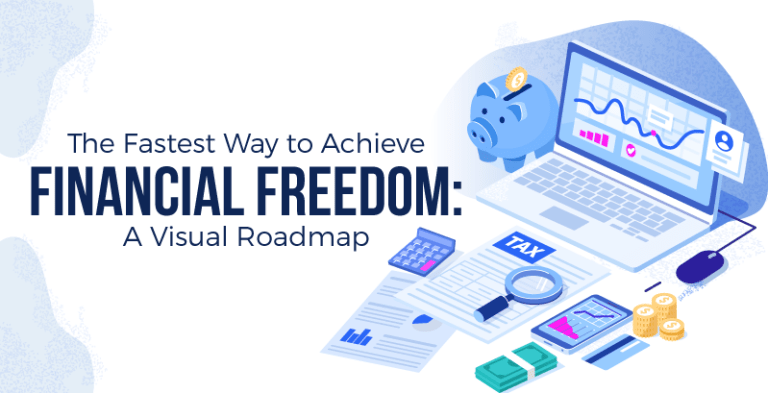
Have a look at the visual graph below for the step-by-step guide on how to achieve financial independence. Soon, financial freedom will be within your reach.

Feel free to share this post on social networks. This opinion article is for informational purposes only.

Follow my blog for more insightful articles: http://temitopeadelekan.com

Want to submit a blog post: Share a blog post

Twitter: @taymethorpenj

Brought to you by Hacking Money

Edited by Temitope Adelekan

Why use Anti-Phishing Attack Software to Ensure Cybersecurity?


Phishing

A phishing attack is a process in which an imposter or an attacker sends emails to the users at large claiming to be someone they know or belonging to a brand/ services they use. Most of these emails ask users to share their personal information such as the bank account details, credit card number and pin numbers, or other such information which can lead to identity and financial theft. The emails would also ask the users to open a link or the attached document and download a file. When the user falls prey and performs any of the said actions, the malicious virus hidden in the email will enter their computer. It will provide the attackers access to the computer and allow them to steal the information stored on it without the user’s knowledge.

Over the years, many antivirus software products, spam and malware filters have been developed to detect such emails and prevent the users from being duped. Enterprises have become a hot target for the attackers. Even if one employee in the entire organization would become a victim, the attackers could access and control the entire system of the enterprise.

Almost every enterprise has antivirus software installed along with firewalls, spam filters, and other such email security systems. Yet, a good number of phishing emails slip past the filters and end up reaching the employees. Many employees have been duped and as a result, the enterprises have suffered losses in more ways than one.

If we wonder why, the answer is quite simple. Despite the claims, the traditional antivirus software packages do not successfully detect and prevent all kinds of phishing attacks. With changing technology, attackers are creating innovative methods to slip past the security filters.

What the companies need is phishing attack software that will provide all-round protection by identifying every suspicious and fraudulent email and alerting the users. The attackers not following the old methods of sending easily detectable fake emails. Instead, they are targeting a certain section of employees with highly intelligent email techniques. It is more or less impossible for the traditional antivirus software that relies on a standard database to compare the emails to identify and detect the latest phishing attacks.

If we consider Zero Day Attack as an example, it is one of the newest phishing attacks in the market that doesn’t get detected by most software packages. On average, about 1.5 million new phishing sites and email ids are created. To keep up with the ever-increasing list of fake websites is not a solution. It takes 24-48 hours to create a signature of complex malware, while it takes less than 82 seconds for an employee to fall victim to the phishing attack.

So, we need something uses a different technique to detect fake URLs without spending hours of time on it. Only then can the employees and enterprises be saved from phishing attacks. The latest and advanced phishing attack software used artificial intelligence and machine learning algorithms to scan and recognize the hidden malicious code in the emails and alert the employees. The most common type of Zero Day attacks are-

  • Microsoft Office Marcos
    • Macros are one of the most helpful tools offered by Microsoft. With one click, the repetitive tasks can be automated, thereby saving time for the employees.
    • When the attacker sends an email attachment with an Excel or other Microsoft file, the macros are coded to install malware throughout the system.
    • Using the machine learning technology, the latest anti phishing software identifies the hidden code and alerts the users about the email be a phishing attack.
  • Malicious Links
    • Embedded links within emails make it easy for websites to share information with their customers.
    • The same feature is used by scammers. They include links that will lead the user to a fake website. The IP address and domain names are similar to the brand they impersonate making it impossible for users to detect it as fraudulent at a single glance.
    • The anti-phishing software uses computer vision technology to read the minute changes in the domain names and also checks the final page which the link leads to.
  • Infected PDFs
    • The attackers take advantage of the features offered by Adobe Acrobat to include malicious software in the PDF files and send them to their victims.
    • The phishing attack software identifies the malware and blocks the email.
  • Embedded Code
    • HTML emails allow employees to include code in the email, which will be executed when the email is opened.
    • The next-generation anti phishing software detects this hidden code and stops it from being executed.

The anti-phishing software works on any device in any location. It can be deployed throughout an enterprise within a matter of minutes.

Feel free to share this post on social networks. This opinion article is for informational purposes only.

Follow my blog for more insightful articles: http://temitopeadelekan.com

Want to submit a blog post: Share a blog post

LinkedIn connect: Temitope Adelekan

Twitter: @taymethorpenj


Brought to you by David Neeble

Edited by Temitope Adelekan