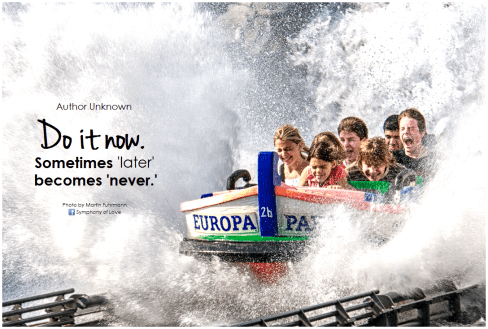
Procrastination, motivational quotes and 15 ways to overcome the habit (Infographic).


13908968402_a9d6fb3dd8_o_d

“Our goals can only be reached through a vehicle of a PLAN, in which we must fervently BELIEVE, and upon which we must vigorously ACT. There is no other route to SUCCESS” – Pablo Picasso

Beginning of every year, we tend to plan our year in advance by penning down what to be achieved. No doubt, this is the best way to start the year. I started this year with loads of goals to achieve in 2016 likewise some of us too. One habit is known to be human beings greatest challenge in achieving their individual goals and the earlier the better you tackle this, or you might have moved deeper into the year before realizing you haven’t achieve any of the goals.

This habit is called PROCRASTINATION. This is known to be a psychological behaviour that affects people to some degree or another. It is also a goal destroyer, a dream killer if not controlled or worked on, it leaves us with guilt, stress, inadequacy, self-disgust or depression. For most of us whenever there’s a goal or task that needs to be done either big or small, important or irrelevant, we answer by saying “I will attend or start later “or rather “postpone it till next day”. This is an habit that should be shun and cast out of our daily lives if we are to ever accomplish our set goals either personally or at our place of work.

Below are 12 powerful procrastination quotes to motivate you & 15 ways to help you overcome procrastination (infographic). So, wake up from your slumber, re-visit those goals or tasks and start work on them right away. Remember, if you don’t start, you wont know that you can. We all can only if we believe and courageous enough to start now. The quotes:

  • “My advice is to never do tomorrow what you can do today. Procrastination is the thief of time.” – Charles Dickens
  • “A year from now you may wish you had started today.” – Karen Lamb
  • “Don’t wait. The time will never be just right.” – Napoleon Hill
  • “You cannot escape the responsibility of tomorrow by evading it today.” – Abraham Lincoln
  • “The two rules of procrastination: 1) Do it today. 2) Tomorrow will be today tomorrow.” – Unknown
  • “What may be done at any time will be done at no time.” – Scottish Proverb
  • “The best way to get something done is to begin.” – Unknown
  • “Whatever you want to do, do it now! There are only so many tomorrows.” – Michael Landon
  • “Procrastination is like a credit card: It’s a lot of fun until you get the bill.” – Christopher Parker
  • “You don’t have to see the whole staircase, just take the first step.” – Martin Luther King
  • “The perfect time to start something never arrives, so therefore, start now.” – Unknown
  • Begin while others are procrastinating. Work while others are wishing.” – William Arthur Ward

I hope you find the quotes useful. Here are 15 ways you can overcome procrastination.

1417534655-15-ways-overcome-procrastination-get-stuff-done-infographic

Remember, information/knowledge is never enough. Let us spread the word!

Thanks for taking out time to read through. Feel free to share, drop your suggestions or contributions.

Follow my Blog: http://temitopeadelekan.com

LinkedIn connect: Temitope Adelekan

Twitter: @taymethorpenj


Infographic Source: Essay.Expert

Tips on how to manage work-related stress (infographic)


8456188296_c28f171779_o_d

Work-related stress is a rising problem around the world. It arises when a job or different work demand surpasses the power and competence of a person to cope. Some of the common work-related stressors are: The work environment, organization culture, change process/management, job contents, bad/horrible bosses e.t.c.

Individuals differ. Jobs that I may feel or see as stressful, to another might sound or feel interesting. So therefore, factors like a person’s psychological nature, personal life, health, state of mind play a huge role in understanding and managing stress at work.

There are various signs of work related stress. In this article, I will limit and classify them into the 3 common parts that are:

Physical

Emotional

Behavioural

Examples of work-related stress physical signs are:

Headache

Insomnia

Constipation

Fatigue e.t.c.

Examples of work-related stress psychological signs are:

Overwhelming

Anxiety

Irritation

Discouragement e.t.c.

Examples of work-related stress behavioural signs are:

Reduction in work performance

Reduction in creativity level

Mood swings

Aggressiveness e.t.c

Can you identify with any of the listed signs?

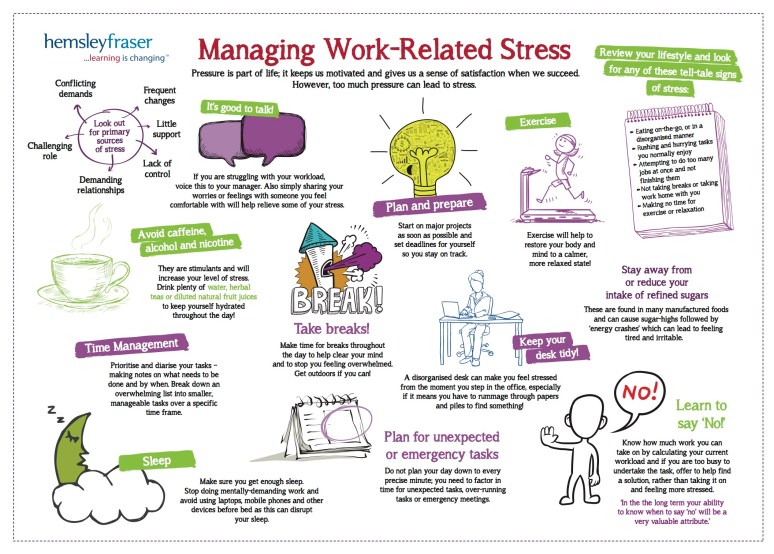
If yes, there is no cause for alarm. Together, we can successfully manage and further prevent work-related stress. Below is an infographic on managing work related stress.

ManagingWorkRelatedStressInfographic copy

Or click ManagingWorkRelatedStressInfographic to see a bigger version of the infographic.

It is advisable we practice these tips daily and also, share the information with colleagues, friends and family. If taken seriously, below are 4 projected benefits:

Increased self/work productivity

Greater job satisfaction

Improved employee health

Less illness and lost time/fewer injuries. E.t.c.

Remember, information/knowledge is never enough. Let us spread the word!

Thanks for taking out time to read through. Feel free to share, drop your suggestions or contributions.

Follow my Blog: http://temitopeadelekan.com

LinkedIn connect: Temitope Adelekan

Twitter: @taymethorpenj


Source: Infographic


How To Develop A Business Plan For Your 2016 Entrepreneurial Goals (Infographic)


GGoals

Happy New Year to YOU! Thank you for starting the New Year with me. Welcome to 2016. One of the things a lot of us will be doing in a couple of days is setting goals for the new year and some of us already have. Wait a minute and ask yourself this quick question. Are your goals for 2016 S.M.A.R.T? You can read more about how to set smart goals + Goals questionnaire here (‪lnkd.in/dHUXk9J ). Goal setting is very important in all that we do and we should take it more seriously this year. Some of the benefits of goal setting are: clearer focus, optimum use of resources, effective use of time, clarity in decision-making, etc.

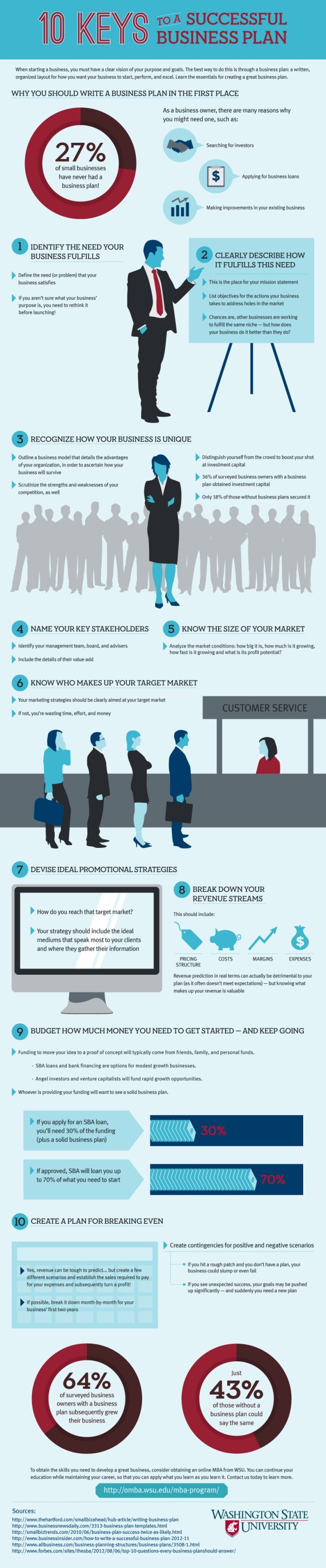
If part of your goals for 2016 is to test an idea out or start a new venture, out of other important things to consider, a business case is one. You can’t erect a building without having it on paper. It’s the same with business; you need to write it out. How do I write a business plan? Why do I need a business plan? What will having a business plan do for me? Here are 10 ways to develop a sound business plan (Infographic).

Business Plan

Thanks for taking out time to read through. Feel free to share, drop your suggestions or contributions.

Follow my Blog: http://temitopeadelekan.com

LinkedIn connect: Temitope Adelekan

Twitter: @taymethorpenj


Credits

Infographic source: Nina Zipkin

Infographic produced by: Washington State University

Compliments Of The Season!


It’s few hours to Christmas and few days to New Year. I feel happy to be connecting with my readers, colleagues, friends all over the world at this hour to share my appreciation for  the hours spent reading, commenting, sharing and practicing some of the things I wrote about. Thank you and I hope and look forward to a better, fun-filled and a prosperous New Year.

Once again, We at Temi’s Blog wishes you a Happy Christmas.


Thank you!

Merci!

Dalu!

Obrigado!

Gracias!

Dankie!

Arigato!

Biyan!

Asante!

Ese pupo!

Nagode!

Rahmat!

Salamat!

Don’t forget to read and share some of my posts with friends and family. That is another perfect way to give a gift this season as Information is not cheap either.

Have fun.

Follow me on Twitter: @taymethorpenj

LinkedIn: temitopeadelekan

WordPress: http://www.temitopeadelekan.com

8 entrepreneurial skills you should teach your kids (Infographic)


The world is changing, and we must change with it. Parents need to pay close attention to the leaders (Kids) of tomorrow. The children of today are the future of tomorrow and future entrepreneurs yet to be discovered. Below are 8 entrepreneurial skills you should teach your kids (infographic) for the tasks ahead.

Future of tomorrowThanks for taking out time to read through. Feel free to share, drop your suggestions or contributions.

Follow my Blog: http://temitopeadelekan.com

LinkedIn connect: Temitope Adelekan

Twitter: @taymethorpenj

Credits

Infographic source: Kim Lachance Shandrow

Infographic produced by: PUMPIC

33 LinkedIn Tips in 140 Characters {Infographic}


LinkedIn is a business-oriented social networking service with millions of active professionals on the site. While some users find it easy to use and use it the right way, some users struggle trying to find the right way to use the site. Below is an infographic by Ethos3 that covers 33 LinkedIn tips to help users enhance their LinkedIn presence.

Source

Feel free to add your own contributions. Don’t forget to like and share with your friends and family.

Follow my Blog: Click here

LinkedIn connect: Temitope Adelekan

Twitter: @taymethorpenj

Thank you.

15 Quotes on Money


Do you think that money is the root of all evil? Have you ever asked yourself what is the root of Money?

What is Money? – According to Mike Moffatt, an economic expert, Money is a good that acts as a medium of exchange in transactions. Naturally, it is said that money acts as a unit of account, a store of value, and a mode of exchange. Also, BusinessDictionary.com defined Money as anything of value that serves as a (1) generally accepted medium of financial exchange, (2) legal tender for repayment of debt, (3) standard of value, (4) unit of accounting measure, and (5) means to save or store purchasing power.

What is your own definition of money?

How do you perceive money?

The reason for this article is to try and change people’s belief about money and I hope these great quotes on money can help you change your perception towards money, stay inspired, motivated and encouraged in an extraordinary way. Below are my 15 great quotes on money:

A wise person should have money in their head, but not in their heart. –Jonathan Swift

Never spend your money before you have it. –Thomas Jefferson

Money is only a tool. It will take you wherever you wish, but it will not replace you as the driver. – Ayn Rand

Empty pockets never held anyone back. Only empty heads and empty hearts can do that. – Norman Vincent Peale

It’s good to have money and the things that money can buy, but it’s good, too, to check up once in a while and make sure that you haven’t lost the things that money can’t buy. – George Lorimer

Money is a terrible master but an excellent servant. – P.T. Barnum

Making money isn’t hard in itself… What’s hard is to earn it doing something worth devoting one’s life to. ― Carlos Ruiz Zafón, The Shadow of the Wind

When it is a question of money, everybody is of the same religion. – Voltaire

Money can’t buy friends, but you can get a better class of enemy. – Spike Milligan

Money has never made man happy, nor will it, there is nothing in its nature to produce happiness. The more of it one has the more one wants. – Benjamin Franklin

Money was never a big motivation for me, except as a way to keep score. The real excitement is playing the game. – Donald Trump

Money is usually attracted, not pursued. – Jim Rohn

Money is the wise man’s religion. – Euripides

Money is like manure. You have to spread it around or it smells. – J. Paul Getty

Money is a headache, and money is the cure. – Terri Guillemets

Feel free to add your own quotes and contributions. Don’t forget to like and share with your friends and family.

Follow my Blog: Click here

LinkedIn connect: Temitope Adelekan

Twitter: @taymethorpenj

Thank you.

How to make the world a better place


In our everyday life, we engage with people either at work, on the road, at home, at the store etc. and it shall continue to be so. Therefore, there is every need to get to understand people and task ourselves with how we can contribute positively to their existence. Below are my five principles on how to affect people positively and to keep making the world a better place.

  1.  Value people
  2.  Teach people
  3.  Support people
  4.  Learn from people
  5.  Grow people
  • Value people

Value – Consider (Someone or something) to be important or beneficial. It also means worth in usefulness or importance to the possessor.

When people feel used, that leads to demotivation, depression to name a few. Although, in a work environment, people are paid for the work they do but value is created more when people are cared for genuinely and loved as human beings and not human “doings”. Also, through feedbacks, either positive or constructively, you can always show how much you value people. In addition, understanding that what interests people varies will go a long way in showing a sense of value of a person. Lastly, tell people you value them as often as you can and always show it rather than concluding they should know. Tell someone you value him or her today!

  • Teach people

Teach – To impart knowledge or skills; to instruct in; to cause to learn by example or experience.

People sometimes learn through experiencing something by themselves. Most times, the person teaching finds it hard to understand the logic behind teaching. Teaching is not just telling. Most times, we have to get into the shoes of people so that we can better understand who they are, where they are, what they need and how best we can teach them. Most times, different situations warrant different approach and level of teaching. For a person to teach effectively and make a difference, it is advisable to ask oneself these questions below:

How prepared are you towards what you want to teach (level of knowledge)?

How clearly do you demonstrate your teaching?

How much coaching do you give to people during practice or during application of what was taught? Etc.

Do you deliver your teachings in respect to the above questions? Education experts have found out that, the more you teach people, the more you help them to increase comfort in themselves and also increase their confidence level. Teach someone today!

  • Support people

Support – To keep from failing; give confidence or comfort to; offering help or advice regarding something.

People pay attention to what you say, how you say it, what you do and how you do it. Unknowingly, you are influencing someone out there either in a positive way or in a negative way. So therefore, to better support people, it is best for you to have a sense of consideration and right intentions towards people so that you can better influence them in a positive way. Another way you can support people is to have a good understanding of people – so that you can relate better with them or comfort them when they need one, believe in people – so that you can guide them and motivate them, being a role model – so that people would want to pattern their life to yours, sharing your failures – is a good way to support people in learning and also to stay confident about who they are not minding the number of times they fail, encourage an amenable approach towards people, recognise people for a job well done and spending time with people you support is another important way to show support. Nevertheless, it is good for us to have at the back of my minds that there are plenty other ways we can show support to people. Show support to someone today!
  • Learn from people

Learn – The act of acquiring new, or modifying and reinforcing, existing knowledge, behaviours, skills, values or preferences and may involve synthesising different types of information.

Going by this popular adage: No man is an island – This translates that no man knows it all. Human learning may occur as part of education, personal development, schooling or training. Sometimes, we find ourselves in the midst of highly intelligent people and we end up throwing away the opportunity rather than try to absorb as much knowledge possibly we can. As individuals, we meet people everyday or better still, chat with people daily. For acquaintances, it is difficult to decipher their IQ because we barely know them but sometimes, it only takes one meeting to know/detect intelligence. For your friends and family, don’t just know them; also learn from their successes and failures. It will be of great advantage if one can keep an open mind-set towards people. In that light, you will learn and develop yourself more easily. A very good example I can use here to close this point is about myself. I learn a lot daily from what people have written, what people talked about, blogs and my environment. This has helped me to acquire new, modify and reinforce my existing knowledge, behaviours, skills and values. How about you? Learn something new today!

  • Grow people

seed-starting-101-420x240

Grow – To become better or improved in some way; to become larger or increase in size; to increase by natural development.

Growing people should be the key focus of every individual, private organisations, government setups, schools, churches, mosques etc. The more we put into growing people, the more we can keep making the world be a better place. Although, for people to develop from point A to B, individuals need to share as much information in their possession with others. It could be done in various ways either through teaching, coaching, preaching, writing etc. Like it’s always said, knowledge is power. In addition, our personality can be a useful tool in growing people. Like I mentioned above in one of the points, the world is listening and studying and before you know it, your personality is influencing someone out there either to grow them positively or negatively. So, always endeavour to be a good role model at all times. We also need to give others the chance to grow by giving them the opportunity to experience situations themselves so that they learn, develop themselves and pass the knowledge onto others. How often do you endeavour to grow people? Nurture someone today!

Let me conclude with one of my best quote of all time by Maya Angelou –

“I’ve learned that people will forget what you said, people will forget what you did, but people will never forget how you made them feel”.

Pay attention to the people around you today and let’s continue to make the world be a better place for us all.

Follow my Blog: click here

Linkedin connect: Temitope Adelekan

Twitter: @taymethorpenj

Hope this is helpful to you and feel free to add your own suggestions, contributions and don’t forget to share with friends and family. Thank you

25 Ways to Make LinkedIn Work for You


LinkedIn is a networker’s dream: an easy way to learn about, and reach out to, millions of business people and thousands of employers. Yet many LinkedIn users don’t take advantage of the site’s features even though the vast majorities are free.

Below are 25 great recommendations written by Liz Ryan. Liz is an expert on the new-millennium workplace and a former Fortune 500 HR executive. The post already appeared on BloombergBusiness. This article helped me and I thought sharing it could be helpful to someone out there.

Here are top 25 recommendations for getting past “Well, I’ve got a login” and making the site really work for you, whether you’re job hunting, hiring, growing your entrepreneurial business, or just seeing and being seen in the online branding arena. You’ll start by creating your LinkedIn profile and adding connections. Then you’ll use LinkedIn’s fancier features to do such things as reach out to friends of friends, join a Group or a LinkedIn Answers conversation, or enhance your profile with apps.

Our first 13 LinkedIn tips focus on your profile:

  • Name: Use your “business” name. My given name is Elizabeth but no one calls me that, so I use Liz in my profile and on my business card. Don’t add extraneous information in the Name field (like “5,000+ connections”) unless you want to brand the size of your Rolodex rather than yourself.
  • Headline: Your LinkedIn headline, just below your name, is a huge branding opportunity. When another user searches the LinkedIn user database, your name and headline are the only things they’ll see before deciding whether to click on your full profile. Make your headline count. “Marketing Manager” isn’t much of a branding statement, but “Marketer Specializing in Social/Content Marketing for Hospitals” separates you from the pack.
  • Photo: Don’t leave your LinkedIn profile photo less. Upload any decent-looking, digital head-and-shoulders photo. You don’t need business attire for this shot. Just use a photo that sends the message, “This is a business or professional person,” meaning (as you may have guessed) last year’s beach vacation shots might not be your best pick. (Then again, it all depends on your brand.)
  • URL: Make sure your LinkedIn profile bears your own stamp in the form of a personalized URL, like http://www.linkedin.com/in/lizryan. Once you’ve got that customized URL, you can use it on your résumé, in your e-mail signature, and on your business card.
  • Summary: Here’s where you can tell your story. “Results-oriented Finance professional” makes you sound like a robot or a zombie. “I started out in Accounting before morphing into a Sales Operations guy” gives us a feel for your path and your personality. Have fun with your LinkedIn summary—it’s the one free-form (and long!) field on LinkedIn where you can speak to the reader (the person viewing your profile) in a human voice.
  • Specialties: The Specialties section of your LinkedIn profile is another great field. You can use terms like “Supply Chain Management” and “Safety Training,” but you can also talk about your Irish wolfhounds and salsa dancing in this field. Prospective clients and employers want real, live, entangled, interesting people on their teams. Business is personal these days, and your outside-of-work interests (the ones you care to share, anyway) are part of your professional persona.
  • Add Sections: A powerful new LinkedIn feature is Add Sections, which lets you amplify your profile with additional information about past jobs, projects, organization memberships, and more. Click on the Add Sections link to preview the various enhancements you can make to your profile just by providing a bit more background.
  • Work History: It takes only a few seconds to upload your text résumé to LinkedIn, and it will save you time creating the Work History section of your profile. You can amplify this field with your proudest accomplishments or particular responsibilities you want readers to know about. It’s important to include the dates (and employer names) for each past assignment so LinkedIn can match you up with colleagues who have worked alongside you.
  • Additional Information: Your profile’s Additional Information field lets you round out the “Story of You” with the URL for your website and/or blog, your Twitter account, honors and awards you’ve won, and your interests (the books you read, the sports you play or follow, or anything else you want to share).
  • Personal Information: You can list as little or as much personal information as you want on your profile. It’s your choice.
  • Education: Including accurate dates in the Education section of your profile will make it easy for the LinkedIn database elves to match you up with classmates who may be on LinkedIn now, waiting for you to reach out and refresh the connection.
  • Contact: The “Contact [Person X] for:” section toward the bottom of your profile is another great field because it forces you to think about what you want from LinkedIn and from your networking in general. This is where you get to decide which types of contacts you want and don’t want. Which conversations are you willing to have, and which ones are a waste of your time?
  • Applications: You can attach Box.net files to your profile in order to showcase events you’ve produced, articles you’ve written, or photos you’ve taken, or to append a full-text résumé to your profile (for instance, if you’re a graphic designer and want to show off what you can do). I could write multiple articles about LinkedIn Applications, but for now I’ll just say check them out.

BUILD YOUR NETWORK

Your LinkedIn profile is in great shape. Now all you need is a network. Here are four tips for bringing your crew back into reach or converting 3D friends and contacts into LinkedIn connections.

  • Connections: Look for the green Add Connections bar on nearly every page of LinkedIn. Use this link to invite folks to join your first-degree network. In most cases you’ll need their e-mail addresses. If LinkedIn gives you the opportunity (some invitation channels do, and some inexplicably don’t), change the standard boilerplate invitation language to sound more like your own voice. Be wary of sending invitations to people who aren’t expecting them—you could lose your invitation privileges that way.
  • Colleagues: The Colleagues feature lets you quickly see which LinkedIn members have worked with you during your career. That’s incredibly handy because we can easily forget people, and we often don’t have current e-mail addresses for our long-ago workmates.
  • Address Book: If you have an address book on Gmail, Hotmail, Outlook, or another popular e-mail application, you can download your entire contact list into LinkedIn. Don’t panic—LinkedIn won’t send spam; it will just tell you which of these contacts are already using LinkedIn.
  • Classmates: Just as the Colleagues feature does, Classmates lets you reconnect with people from your past. Invite people to join your network via the Classmates channel with caution, because this is where LinkedIn invitation spam tends to congregate. A helpful reminder in the body of your invitation (“I remember how much fun it was traveling to Tel Aviv with you in 1993.”) can help refresh the memory of classmates you haven’t been in touch with for a while.

NOW FOR THE GOOD STUFF

My last eight LinkedIn tips will get you using the site actively rather than sitting around waiting for people to reach out to you. Try one a day and build up your LinkedIn chops from “novice” to “cocky” status by next weekend.

  • People Search: Use the People Search link in the upper right-hand corner of nearly every LinkedIn page. (I’ve had no luck whatsoever with the quick-search feature; I use Advanced People Search, however, several times a day.) You can search the LinkedIn database on every imaginable field, from a person’s name or industry to his or her virtual proximity to you. Searching LinkedIn is a free and easy way to build up your business-intelligence acumen and data warehouse. Try it!
  • Companies: LinkedIn’s Companies database is another treasure trove of useful information for job seekers, business developers, headhunters, and everyone else. When you find a company that interests you, click once to “Follow” that company and receive updates on its hires and other news.
  • Connections: When you’re ready to use LinkedIn as a networking tool, browse your first-degree connections’ connections to find someone you’d like to talk to. Make sure you appeal to the recipient and aren’t just asking a favor. You can make contact with the one-hop-away networker using the Get Introduced Through function.
  • Answers: LinkedIn Answers is a feature that lets you ask and answer questions among the massive LinkedIn user community. I use Answers about once a month to inquire about research studies or to get opinions on issues I’m thinking or writing about. And I respond to queries posted by others on topics ranging from HR policies to breast-feeding at work. Answering and posting your own LinkedIn questions adds to your understanding of business topics and increases your networking visibility and credibility.
  • Groups: LinkedIn Groups are magnificent idea sharing and networking tools because they bring together subsets of the overall LinkedIn population, making it easy to converse and view one another’s profiles. Some Groups require approval from the moderator to join.
  • Jobs: LinkedIn includes job openings, but most of the time when I ask job seekers, “Where are you focusing your search?” they mention Monster, Craigslist, and jobs aggregators Simply Hired and Indeed. Those are all great sites, but let’s not overlook LinkedIn, which is unique because it links job openings to actual LinkedIn profiles. In an era when Black Hole recruiting abounds, it’s nice to be able to view a job listing AND the profile of the person who posted it.
  • Updates: Just like Twitter and Facebook, LinkedIn updates keep your network current on what’s new in your life and work. You can update your status on the LinkedIn site or with a multiple-updates application like Hellotxt (which will update your Twitter feed, Facebook status, and LinkedIn status all at once).
  • Endorsements: LinkedIn endorsements, also called Recommendations, are an essential piece of the online networking-and-branding puzzle, but we’ve saved them for last because they require a bit more thought and care. It’s possible to ask people to endorse you on LinkedIn, but I recommend endorsing others first and letting them return the favor for you (LinkedIn prompts them to endorse you once you’ve completed a Recommendation for them).

You must have a first-degree connection with someone in order to endorse him or her. Make sure your endorsements are pithy and specific. The presence of Recommendations on your LinkedIn profile improves your results in database searches … and LinkedIn endorsements have their own power, especially if they’re well written. To give you an idea of how robust LinkedIn’s features are, we’ve barely scratched the surface here. Try some of our 25 tips this week and grow your online networking mojo in the process.

Thanks for reading.

Follow my Blog: http://temitopeadelekan.com

Linkedin connect: Temitope Adelekan

Twitter: @taymethorpenj

Thank you.

My 10 Preferred Quotes On Entrepreneurship


In today’s economy, entrepreneurship is an important instrument of growth.

According to Ajay Bam, a lecturer at the Lester Center for Entrepreneurship at the University of California, Berkeley’s Haas School of Business defined Entrepreneurship as the journey of opportunity exploration and risk management to create value for profit and/or social good.

As defined by Andrew Schrage – Blogger and Owner of MoneyCrashers.com -“An entrepreneur is an innovative, risk-taking individual who identifies a need in a market and finds a way to fill it, whether by using his or her own expertise and passion, the knowledge of others, or a combination of the three. More simply stated, an entrepreneur is someone who sees an opportunity and invests in it in order to turn a profit or provide a solution to some larger issue in the world.”

The doers of entrepreneurship are called entrepreneurs but not all entrepreneurs possess entrepreneurship attributes.

Here are my 10 preferred quotes on entrepreneurship. Read it carefully, let it inspire you, motivate you and empower you to become the next big & celebrated entrepreneur of all time.

  1. “The best time to plant a tree was 20 years ago. The second best time is now.” – Chinese proverb.
  1. “It’s not about ideas. It’s about making ideas happen.” – Scott Belsky, co-founder of Behance.
  1. “If you’re not a risk taker, you should get the hell out of business.” – Ray Kroc, founder of McDonald’s.
  1. “A person who never made a mistake never tried anything new.” – Albert Einstein, physicist.
  1. “Risk more than others think is safe. Dream more than others think is practical.” – Howard Schultz, CEO of Starbucks.
  1. “The way to get started is to quit talking and begin doing.” – Walt Disney, co-founder of the Walt Disney Company.
  1. “Entrepreneurship is neither a science nor an art. It is a practice.” – Peter Drucker, management consultant, educator, and author.
  1. “I’ve missed more than 9,000 shots in my career. I’ve lost almost 300 games. 26 times I’ve been trusted to take the game’s winning shot and missed. I’ve failed over and over and over again in my life and that’s why I succeed.” – Michael Jordan, NBA Hall of Famer.
  1. “If you have time to whine then you have time to find solution.” ― Dee Dee Artner
  1. “The critical ingredient is getting off your butt and doing something. It’s as simple as that. A lot of people have ideas, but there are few who decide to do something about them now. Not tomorrow. Not next week. But today, the true entrepreneur is a doer, not a dreamer.” – Nolan Bushnell, entrepreneur.

In conclusion, from me to you – Put your ideas to test today and get the right entrepreneurial team who will help you spread out the risk of the new enterprise and also bring in different talents and skill sets (the Lean way). With that in place, don’t be afraid. Take that calculated risk! I have started mine with my team by developing a marketplace for events at www.eventstop.ng (Launching soon). It’s never too late to start as your risk can lead to huge success if you do things right. Examples of great entrepreneurs are:

Bill Gates – Founder of Microsoft

Mark Zuckerberg – Founder of Facebook

Pierre Omidyar – Founder of eBay

Sim Shagaya – Founder of Konga

Travis Kalanick, Garrett Camp – Founders of Uber

Evan Williams, Noah Glass, Jack Dorsey, Biz Stone – Founders of Twitter

Brian Chesky, Nathan Blecharczyk, Joe Gebbia – Founders of Airbnb

Matt Rogers, Tony Fadell – Founders of Nest

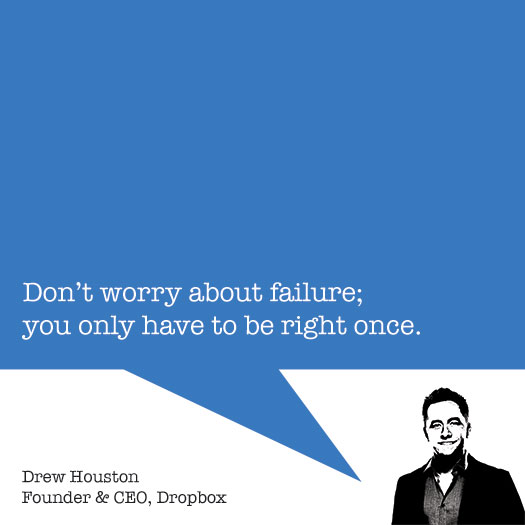
Drew Houston – Founder of Dropbox

Remember, they took the risk to become world-celebrated individuals and also, introduced change in various industries.

Good luck!

Thanks for your time. Feel free to add your own quotes and contributions. Remember to like and share with your friends and family.

Follow my Blog: http://temitopeadelekan.com

LinkedIn connect: Temitope Adelekan

Twitter: @taymethorpenj