
What Makes a “Good” PhD Student? Lessons from New Zealand and Beyond


Five years post-PhD, I reflect on the question: What makes a good PhD student? Pursuing a PhD is not just a transformation, but a test of endurance, independence, and intellectual curiosity. It requires more than just academic intelligence. In New Zealand, where I earned my doctorate, the doctoral journey is shaped by bicultural values, unique funding models, and independent research pathways. While universities worldwide often emphasise high grades, research ability, and independence, the reality is that a good PhD student is someone who can navigate complexity, build meaningful relationships, and sustain their wellbeing over time.

In this short article, I explore what being a good PhD student means and how do we challenge the biases often embedded in that question?

1. Independence, Wellbeing, and Balance

New Zealand PhD programmes are generally structured around independent research rather than coursework-heavy models found elsewhere. Students are expected to work autonomously, define their research goals, and proactively seek guidance. A uniquely New Zealand view of wellbeing is offered by Mason Durie’s Te Whare Tapa Whā model, which sees wellbeing as a balance of four dimensions: taha Wairua (spiritual), taha Hinengaro (mental), Taha Tinana (physical), and taha whānau (social). PhD students who maintain balance across these areas are more likely to sustain productivity and avoid burnout. For example, a friend, a former PhD student in sociology, developed her own community-engaged project with Pacific youth in South Auckland. She initiated relationships with stakeholders, co-designed interviews with community groups, and adjusted her methodology to respect cultural protocols.

What you can do: Learn to manage your time and set research goals independently. Use tools like Gantt charts or Notion to track your milestones and check in with your supervisor regularly, even if you don’t have to. Also, make time for community events, spirituality or meditation, physical activity, and relationships outside academia.

2. Cultural Competence and Responsiveness

In the context of Te Tiriti o Waitangi and a growing commitment to equity, diversity, and inclusion, PhD students in Aotearoa are increasingly expected to demonstrate cultural competence, particularly in engaging with Māori and Pacific communities. Good PhD students in New Zealand engage with culturally responsive practices, recognising that research is not just an intellectual process, but also a cultural and ethical one. For example, a known PhD student at a University in Auckland incorporated te ao Māori principles into their education research, learning tikanga and consulting with iwi partners throughout their project. This led to meaningful collaborations and more ethical research outcomes.

What you can do: Engage with the university’s cultural support services, learn the research ethics specific to Māori and Pacific communities, such as Māori or Pacific student support teams, and attend relevant workshops or visit the marae or fale. Consider how your research reflects or contributes to bicultural practice.

3. Critical Thinking (Including Self-Critique) and Intellectual Curiosity

A good PhD student asks what they are researching, why it matters, who it benefits, and how power operates through their methods. This goes beyond a literature critique; it’s also about recognising one’s positionality and biases. In New Zealand, critical thinking also includes challenging dominant Eurocentric paradigms and being open to Mātauranga Māori (Māori knowledge systems), Pacific knowledge frameworks, and non-Western epistemologies. For example, a PhD friend in public health at the University of Auckland revised their framing after realising their original design unintentionally marginalised Māori health narratives using a Eurocentric care model.

What you can do: Attend interdisciplinary seminars, join reading groups and read widely outside your discipline. Use reflexivity journals to reflect on how your values, background, and assumptions shape your work. Seek feedback from diverse supervisors to deepen your thinking.

4. Resilience and Adaptability

No PhD journey is linear. Research directions change, fieldwork gets cancelled, or publications get rejected. In New Zealand, the small size of academic networks can also create challenges around supervision changes or limited departmental support. One of the most important predictors of PhD success is the quality of the student-supervisor relationship. Power dynamics, especially across race, gender, and class lines, can hinder open communication. Students may fear “rocking the boat,” particularly in hierarchical departments. A good PhD student knows how to manage this relationship professionally, assert their needs, and seek clarity when expectations are unclear. For example, a PhD candidate whose international fieldwork was cancelled due to border closures during COVID-19 successfully pivoted to a digital ethnography using Zoom-based interviews and online forums.

What you can do: Supervisors may equate silence with competence. So, it is crucial to set regular check-ins with your supervisor, document meetings, set agendas ahead of time, and consider asking for a second supervisor where one is not already in place or get a mentor if needed. For example, many students from collectivist cultures may feel hesitant to speak up. This can lead to miscommunication and missed opportunities. Therefore, build a strong support network outside your primary supervisor, including peers, postgraduate advisors, join postgraduate networks like PGSA or departmental research groups, and professional development services like those offered by career and employability services, campus life, etc. Using setbacks as learning opportunities while on this journey is also important.

5. Good Communication Skills (Not Just Academic Writing)

Being able to articulate your research to diverse audiences, including community stakeholders, funders, or students, is a major asset. This is especially important in New Zealand due to the emphasis on public-good research and engagement. For example, a colleague partnered with a regional council to translate climate research into local policy briefs and infographics. Long story short, their work contributed directly to regional planning initiatives.

What you can do: Take advantage of workshops like ThesisLink, competitions like the 3MT (Three-Minute Thesis), and your provisional year review examination to hone your public speaking and storytelling skills.

This next part will focus on unpacking the biases surrounding What a Good” PhD Student looks like.

Unpacking Common Biases: What a “Good” PhD Student is “Not”

From experience as a student and professionally, too often, implied biases distort our understanding of what makes a Good PhD student. To keep this writing short, here are common myths that deserve challenging:

Myth 1: A good PhD student publishes early and often.

While publication is valuable, not all disciplines prioritise early publishing, and it is also worth noting that students are on different career levels and pathways. In kaupapa Māori or community-based research, building trust and doing ethical research can take longer than the publishing cycle permits. Note, output is not always a reflection of capability.

Myth 2: Full-time, fully funded scholarship students are the most committed.

In reality, many excellent candidates work part-time or full-time (one of the benefits of doing a PhD in New Zealand – open work rights with no limitation) and have no scholarship awarded to them. According to Universities New Zealand, approximately 43% of doctoral candidates in 2023 were international, with international students comprising about 57% of all PhD graduates, and many juggle financial, immigration, and family pressures alongside study.

Myth 3: Fluent academic English is a must.

Academic excellence is not limited to linguistic fluency. Many students whose first language is not English contribute deeply through theoretical insight, technical expertise, and global perspectives. In addition, universities often provide editing and writing support to students, no matter your background. That said, do not confuse fluency with intelligence.

Myth 4: A good PhD student works in isolation.

The stereotypical image of the lone intellectual is outdated and unhelpful. In New Zealand, collaborative work is highly valued, especially with communities, iwi, hapū, or industry partners. Being able to seek feedback, build research relationships, and contribute to team environments is essential.

Myth 5: A good PhD student never questions their supervisor.

Healthy, constructive disagreement is often part of intellectual growth. Good supervision relationships in New Zealand are increasingly built on mutual respect and open dialogue. Supervisors expect critical thinking, not passive agreement. With that said, always read the room and don’t make this a chore.

Myth 6: A good PhD student must study full-time and finish in 3 years.

Life circumstances, funding challenges, caregiving responsibilities, or health may make part-time or extended study the only viable option. However, the part-time option is not available to international students. In fact, some of my Māori, Pasifika, and first-generation doctoral friends follow non-linear study paths and still produce excellent research.

Myth 7: A good PhD student has a clearly defined project from the start.

Many students, particularly in qualitative fields, refine or even pivot their research questions after months or years of reading, engaging with communities, or conducting fieldwork. Adaptability, not rigidity, often produces better scholarship.

Myth 8: A good PhD student is young and recently graduated.

There is no “ideal age” for starting a PhD. Many outstanding PhD candidates in New Zealand are mid-career professionals, parents, or retirees. Their lived experience often enriches their research depth and societal impact.

Myth 9: A good PhD student should avoid “non-academic” work.

Industry collaboration, teaching, advocacy, community work, and even casual jobs can build valuable skills and inform research. In New Zealand’s tight academic job market, these broader experiences often make candidates more employable and grounded.

Recognising Shared Responsibility: What Supervisors and Institutions Can Do

While much attention is given to how PhD students can improve, succeed, or “measure up,” it is equally important to acknowledge that success in a doctoral journey is a shared responsibility. Supervisors, academic departments, and institutions play a critical role in shaping supportive environments where diverse candidates can succeed. Institutions, for instance, are responsible for enabling good research environments and meeting their pastoral care code obligations. Beyond academic guidance, this involves promoting culturally responsive supervision training (e.g., Ako Aotearoa frameworks), ensuring transparent feedback processes, enabling funding and flexible work arrangements for underrepresented groups, and providing industry skills preparation and pastoral and mental health support.

Final Thoughts: Rethinking “Good”

Being a good PhD student is not about perfection; it is about growth, responsibility, and meaningful engagement with knowledge. In New Zealand, that also means honouring Te Tiriti, challenging Eurocentric standards, and recognising and respecting diverse ways of knowing and being. Whether starting your PhD journey or supporting someone on theirs, remember that potential is not always loud and brilliance comes in many forms. If you are a prospective PhD candidate and would like to chat about what it is like to do a PhD in New Zealand, or you are currently in New Zealand pursuing a PhD and have questions, head over to www.phdtribe.com to book your free one-to-one meeting.

References

Ako Aotearoa. Cultural Competence & Teaching Practice. Retrieved from https://ako.ac.nz/knowledge-centre/ki-te-hoe-indigenising-spaces

Durie, M. (1998). Whaiora: Māori Health Development. Oxford University Press.

Health Research Council NZ. HRC Research Ethics Guidelines. Retrieved from https://www.hrc.govt.nz/resources/hrc-research-ethics-guidelines

McAllister, T., Naepi, S., Walker, L., Gillon, A., Clark, P., Lambert, E., … & Alipia, T. (2022). Seen but unheard: navigating turbulent waters as Māori and Pacific postgraduate students in STEM. Journal of the Royal Society of New Zealand, 52(sup1), 116-134.

Ministry of Health New Zealand – Manatū Hauora (2023). Te Whare Tapa Whā – A Māori Model of Health.

ThesisLink Blog – NZ-based resource for postgraduate students. Retrieved from https://thesislink.aut.ac.nz/

Three Minute Thesis (3MT NZ). Retrieved from https://www.auckland.ac.nz/en/students/academic-information/postgraduate-students/doctoral/doctoral-opportunities/3mt.html

Universities NZ – Te Pōkai Tara. Driving research and innovation. Retrieved from https://www.universitiesnz.ac.nz/sector-research/driving-research-and-innovation

Vaioleti, T. M. (2006). Talanoa research methodology: A developing position on Pacific research. Waikato Journal of Education, 12(1). Retrieved from https://wje.org.nz/index.php/WJE/article/view/296

Feel free to share this post on social networks.

Follow my blog for more insightful articles: http://temitopeadelekan.com

Want to submit a blog post: Share a blog post

Twitter: @taymethorpenj

Edited by Temitope Adelekan

The Art of Failing: The Importance of Embracing Failure and Trying Again


We have all heard the phrase “failure is not an option,” but in reality, failure is not only an option but also a necessary part of success. That’s right! Failure is not the antithesis of success; rather, it is a pathway to success. In today’s society, failure is often seen as a negative thing. From a young age, we are conditioned to avoid failure at all costs, and those who experience failure are often stigmatised as incompetent or inadequate. But what if we approached failure differently? What if we saw it as an opportunity to learn, grow, and try again? As Noonan (2019) indicated, experiencing failure is a normal aspect of life and is crucial for achieving success if accepted. Noonan’s work provides reassurance and confidence in embracing failure as a path to success.

The concept of embracing failure and trying again is based on the growth mindset theory developed by Carol Dweck, a psychology professor at Stanford University. According to Dweck, individuals with a growth mindset believe that their abilities can be developed and improved through hard work and dedication. They see failure as an opportunity to learn and grow, rather than a reflection of their intelligence or abilities. Studies have shown that individuals with a growth mindset are more likely to persevere through challenges and achieve their goals. They are less likely to give up after a setback or a failure and are more likely to try again and learn from their mistakes.

Furthermore, embracing failure and trying again can lead to creative breakthroughs and innovation. In his book, “The Myths of Innovation,” author Scott Berkun argues that many great inventions and discoveries were the result of multiple failures and iterations. Thomas Edison, for example, famously said, “I have not failed. I’ve just found 10,000 ways that won’t work,” referring to his numerous attempts to invent the light bulb. J.K. Rowling: The author of the wildly popular Harry Potter series faced rejection after rejection from publishers before finally landing a book deal. She could have given up after the first few rejections, but instead, she kept trying until she found success. Another great example is Michael Jordan: Considered one of the greatest basketball players of all time, Jordan was cut from his high school basketball team. Instead of letting this failure discourage him, he used it as motivation to work harder and improve his skills. How about Abraham Lincoln? Before becoming one of America’s most beloved presidents, Lincoln failed at several business ventures and lost numerous elections. Despite these setbacks, he never gave up and eventually found his way to the White House.

So, what am I trying to communicate: the importance of embracing failure and trying again cannot be overstated. Failure is not the opposite of success; it is a necessary part of the journey. When we approach failure with a growth mindset, we become more resilient, more determined, and more likely to achieve our goals. Therefore, the next time you experience a setback or a failure, remember Thomas’s, Harry’s, Michael’s, and Abraham’s stories. Don’t give up. Instead, use the experience as a learning opportunity and try again.

Remember, failure is not the end of the road; it’s an opportunity to try again, learn from our mistakes, and grow. Best wishes

Feel free to share this post on social networks.

Follow my blog for more insightful articles: http://temitopeadelekan.com

Want to submit a blog post: Share a blog post

Twitter: @taymethorpenj

Edited by Temitope Adelekan

Reference: Noonan, D. (2019). Failure found to be an essential prerequisite for success. Scientific American.

The Debate: Theoretical Knowledge vs. Vocational Knowledge


Over the weekend, I was reading my notes and came across the subject (written in 2019 when finalising my thesis) and decided to write a quick short blurb about this important topic.

There continue to be compelling arguments in the ongoing debate surrounding the superiority of theoretical knowledge over vocational knowledge (and vice versa). The decision between these knowledge types is not simple, as each offers distinct advantages and drawbacks. In this short article, I will briefly delve into the characteristics of both theoretical and vocational knowledge while exploring their unique qualities and contributions to personal and societal growth.

Theoretical Knowledge: Abstract Understanding and Academic Excellence

Theoretical knowledge encompasses the abstract and academic realms of learning. It is acquired through studying disciplines like philosophy, mathematics, and sciences, typically within formal educational settings or research environments. This type of knowledge is highly regarded for its ability to unravel complex systems and concepts, laying a foundation for further exploration and inquiry. The benefits of theoretical knowledge include but are not limited to the following:

  1. Critical Thinking: Theoretical knowledge encourages abstract thinking, fostering the ability to analyse and synthesise complex information.
  2. Conceptual Understanding: It provides insight into the underlying principles governing various phenomena, contributing to a deep understanding of the world.
  3. Research and Advancement: Theoretical knowledge fuels research and innovation, pushing the boundaries of human knowledge and discovery.

Vocational Knowledge: Practical Proficiency and Skill Application

Vocational knowledge is grounded in practical application within specific trades or professions. This knowledge is acquired through on-the-job training and hands-on experience. It equips individuals with the skills required to excel in particular tasks and roles, often proving vital for career progression. The advantages of vocational knowledge encompass but are not limited to the following:

  1. Hands-on Expertise: Vocational knowledge imparts practical skills, enabling individuals to perform tasks with precisely and efficiently.
  2. Employability: It enhances employability by equipping individuals with practical skills that directly align with job requirements.
  3. Real-world Problem Solving: Vocational knowledge empowers individuals to solve real-world challenges, contributing tangibly to personal and societal needs.

The Intersection: Hybridisation of Knowledge Types 

Rather than a definitive answer to which knowledge type is superior, there’s an increasing recognition of the value of hybridising theoretical and vocational knowledge. This fusion acknowledges that an all-encompassing education benefits individuals and society alike. By blending abstract thinking with practical application, individuals become versatile and adaptable, capable of approaching challenges from multiple angles.

The Call for All-Around Education

The question arises: Should educational institutions prioritise this hybrid approach over favouring one knowledge type over the other? Embracing a balanced curriculum can produce well-rounded individuals who possess the ability to think critically, solve problems practically, and adapt to evolving scenarios. Such individuals are equipped to make meaningful contributions to both their personal growth and societal progress.

Conclusion

In the end, the superiority of theoretical or vocational knowledge depends on individual aspirations and inclinations. However, as we navigate an increasingly complex world, recognising the benefits of both knowledge types paves the way for a holistic educational approach. By embracing a hybrid model, we can foster individuals who are knowledgeable in theory and adept at applying their skills to real-world challenges, ultimately benefiting both themselves and society at large. 

What are your thoughts on this matter? Please, feel free to share your perspective below.

Feel free to share this post on social networks.

Brought to you by Temitope Adelekan

Imposter syndrome: 13 management tips


Imposter syndrome can make you feel like a fraud if not properly managed. It is time to stop underestimating your value! Stop underrating your achievements! Stop linking your success to luck! You are much more remarkable than you think.

It seems like a psychological practice for improving your self-esteem, right? But this is our advice to prevent you from developing impostor syndrome – a mental state that puts your capabilities in doubt. Some of the most common signs of the syndrome are hesitancy, fear, stress, anxiety, and the inability to accept healthy criticism and compliments.  

Are you wondering how to deal with impostor syndrome? First and foremost, don’t ignore it. If you notice that you doubt your strengths and criticise yourself too much, consider discussing this problem with someone you trust. Also, you can seek professional psychological help if you find you cannot overcome the syndrome by yourself.   

Want to learn more recommendations about beating the impostor syndrome? Check out the following iconographic for more handy tips and valuable insights.

Feel free to share this post on social networks. This opinion article is for informational purposes only.

Follow my blog for more insightful articles: http://temitopeadelekan.com

Want to submit a blog post: Share a blog post

Twitter: @taymethorpenj

Brought to you by Caitlyn Hewitt

Edited by Temitope Adelekan

Guest Networks 101: A Simple Guide


In today’s uber-connected world, having a solid Wi-Fi connection is key to not only spending solo time at home but also having friends and family over. It can be a pain to sift through papers to find your Wi-Fi password that guests inevitably ask for when they walk in your door.

One workaround is to set up a dedicated guest network. A guest network is an alternate access point to your internet router that’s separate from the main network to which you connect your phone, TV, and computers. So your main network is meant for your trusted devices, and your guest network is meant for unfamiliar devices belonging to your friends and family.

A benefit of setting up a guest network is that you can grant internet access to devices that may be at a greater risk of falling victim to data breaches or other types of cyberattacks. Plus, some Wi-Fi routers allow you to limit the speed available on your guest network, so your main network connection is never lagging.

Norton has created this helpful step-by-step infographic (see below) on how to set up a guest network. It also offers tips for setting up your guest network for success so that you can keep your devices and data safe while providing your friends and family Wi-Fi access.

Feel free to share this post on social networks. This opinion article is for informational purposes only.

Follow my blog for more insightful articles: http://temitopeadelekan.com

Want to submit a blog post: Share a blog post

Twitter: @taymethorpenj

Brought to you by Lydia McAllister

Edited by Temitope Adelekan

The Enlightenment and Advancement in Education


istockphoto-1191181095-1024x1024

According to Israel (2013), the ‘Enlightenment’ was the most significant and profound intellectual, socio-economic and political evolution of the Western world since the Middle Ages and the most developmental in shaping modernity. This philosophical revolution started not as a definite ‘thing’ or even as a chronological age, but as processes involved with the central place of reason and of experience and experiment in grasping and developing human society (Withers, 2008). The ‘Enlightenment’ is generally thought of as a “European intellectual movement of the late 17th and 18th centuries emphasizing reason and individualism rather than tradition” (English Oxford Living Dictionary, 2019). This period is also often referred to as ‘The Age of Reason’ to denote a time when individuals began to utilise reason to confront matters of philosophy, government, and society. The philosophical Enlightenment was intertwined with the Scientific Revolution. Guider (2015) argues that this “period was characterized by discoveries in mathematics, physics, astronomy, biology, and chemistry, and these discoveries would not have been possible without the use of reason” (p. 5).

In education and educational history, the Age of Enlightenment (1680-1800) created important changes. In an effort for humans to release themselves from the dogmatism that symbolised the ‘dark Middle Ages’, during the Renaissance and Reformation periods in the West, such changes began to exert influence in both philosophy and technology (Abu‐Rabia‐Queder, 2008). This age of modernity seemingly started the move towards the Age of Enlightenment in the 18th Century Europe (Horkheimer, Adorno, & Noeri 1969/2002). In terms of describing the Enlightenment, historians have found it extremely hard to provide a fully acceptable description, but I would use the description put forward by Israel (2013) due to its conciseness. He argues that

Enlightenment is, hence, best characterized as the quest for human amelioration occurring between 1680 and 1800, driven principally by ‘philosophy’, that is, what we would term philosophy, science, and political and social science including the new science of economics lumped together, leading to revolutions in ideas and attitudes first, and actual practical revolutions second, or else the other way around, both sets of revolutions seeking universal recipes for all mankind and, ultimately, in its radical manifestation, laying the foundations for modern basic human rights and freedoms and representative democracy. (p. 7).

With that in mind, to deepen my argument and to give appropriate background on how modern universities came to be; and how the Enlightenment values that reflected education as an instrument of development and social reform remains the fundamental features of any educational system, I will trace the history of the Enlightenment Age up to today briefly by highlighting the key ideas and milestones.

During the late seventeenth century until the eighteenth century, religion was the primary means that obstructed societies from ‘Enlightenment’. Schmidt (1989), points out that religious traditions and sectarianism impedes an individual’s ability to justify the reason behind everyday events. He further suggests that the ultimate aim of the Enlightenment was to release the public from religious fears and superstitions that retracted an individual’s freedom to develop logical and reasoned thought. However, support for religious toleration was hard since the Catholic Church had a significant stake on European societies, and the public recognises the church as the government of the day (Bovey, 2015; Steinfels, 2008). During the Enlightenment Age, scientists who formed theories that the church deemed unacceptable were persecuted (Leveillee, 2011). For example, Galileo Galilei (1564-1642) and Nicolaus Copernicus (1473-1543) were two scientists who published books that went against accepted belief, and as a result, the books were banned (Leveillee, 2011). Under the ban circumstances, Galileo was tried by the Inquisition, and was forced to recant. Until his death in 1642, Galileo was kept under house arrest. In 1938, he published Two New Sciences in Holland – a work on the foundation of mechanics and engineering (Hilliam, 2005; Finocchiaro, 1997). These scientist philosophers were among the first to consider a new way of thinking, and they brought fresh ideas that eventually transformed societies in the West. I will now begin by unwrapping the meaning of the word Enlightenment.

Enlightenment thinking in the 18th century was clearly indicated with the publication of Kant’s essay in 1784, but Lozar (2014) and Bristow (2010) think Descartes (1637) started the period while Dominiczak (2012) cites the work of Isaac Newton’s Principia Mathematica (1687). In November 1784, Kant submitted a response to the question in the journal – The Berlinische Monatsschrift posed by Johann Friedrich Zollner, a theologian and educational activist: Was ist Aufklarung? (‘What is Enlightenment?’) (Schmidt, 1989). According to Schmidt (1989, p. 269), Kant defines Enlightenment as

man’s emergence from his self-incurred immaturity. Immaturity is man’s inability to use one’s own understanding without the guidance of another. This immaturity is self-incurred if its cause is not lack of understanding, but lack of resolution and courage to use it without the guidance of another. The motto of enlightenment is therefore: Sapere aude! [Dare to know! Alternatively, Dare to think for yourself or]”Have courage to use your own understanding!”

However, what exactly was it that Kant urged humanity to know? From the above basic definition of Enlightenment, Kant introduces three crucial points. Firstly, as regards to development and immaturity, he raises the question about the importance of history. Secondly, having the freedom to make public use of one’s reason raises the question of critique, and thirdly, to make use of one’s understanding instead of depending on the guidance of others raises the question about freedom (Kant, 1793).

In education, this philosophical debate that took place during the Enlightenment Age disturbed the foundation of education in Europe and many western nations that was based on religious beliefs and superstitions. The debate had a lasting effect on education, and is now what is most often called the “quarrel of the ancients [past] and moderns [present]” (Oelkers, 2002, p. 679). The debate developed during the seventeenth century, exploded in the 1690s and was taken into the eighteenth century. Oelkers (2002) describes ‘the ancients’ as people who were in support of an education founded on “canonized knowledge, taught with textbooks and methods that drew on ancient authors, and implying that all of the knowledge needed in philosophy and science is already available” (p. 681). In contrast, ‘the moderns’ were people who actively reject an education founded on canonised knowledge, but supported an education that acknowledged that “If future learning can bring new truths, old knowledge can no longer be regarded as perfect; thus, ancient authors cannot be the masters of the present.” (Oelkers, 2002, p. 681). Oelkers also cites (Keller, 2000) that argue that “to study Plato or read Homer is not to fill the mind with eternal truths in philosophy or literature. Education must be opened to a new learning, at least in terms of research and the production of knowledge” (p. 681). Moreover, Oelkers suggests “after this historically important debate, education and learning could be connected with the open experience of modern science” (Oelkers, 2002, p. 679).

After years of a philosophical debate between the Ancients and the Modern, the ideas of Enlightenment philosophers namely John Locke (1632-1704) and Jean-Jacques Rousseau (1712-1778) introduced new ideas into education. According to Gilead (2005),

For centuries it was almost unquestionably accepted that the main aim of education was to bring man closer to God. For educational purposes, man was perceived first and foremost as the son of God and the function of education was directly derived from this perception. It was commonly agreed that the central role of education was to make man pious in this world and prepare him for a happy life in the next (p. 429).

Within European Society at that time, particularly in France, Grandiere (1998) states that the year 1725 was a crucial point for French educational Enlightenment thinkers in the sense that man was disunited from the beliefs of religion and began to see “man as a member of society and no longer man as the son of God” (Gilead, 2005, p. 429). This radical way of reasoning embraced by the followers of the new educational thought helped to establish many ideas that continue to form the modern educational system today. To paraphrase the words of Grandiere (1998), the ancient religious purposes of education were being exchanged by new social goals. According to Gilead (2005), the followers of the ‘old’ movement “were increasingly concerned with the happiness of man on earth and in particular with his happiness as a member of society”, [whereas for the emerging modern thinkers, they] “placed the emphasis on the mundane aspects of human life” (p. 429).

During this period, there were opposing views on what precisely the emerging modern thinkers meant with their movement and how to achieve some of the ideas they introduced. Charles-Irénée Castel de Saint-Pierre (1658-1743) and Claude Adrien Helvetius (1715-1771), two of the leading figures of the new movement suggest that the end goal of education was to uphold the common good of society. In 1728, Charles-Irénée Castel de Saint-Pierre wrote in the first page of his book on education that “the aim of education is, in general, to make the happiness of the pupil, his parents and the other citizens much greater than it could have been without such an education” (Gilead, 2005, p. 429). Both authors alleged that education should aim at increasing the totality of happiness in society. On the contrary, Rousseau had a radically different view. He argues that the aim of education should “focused on the formation of a happy individual” (Gilead, 2005, p. 438). The former relate the purpose of education to promote the happiness of ‘individuals’ while Rousseau relates the purpose of education to promote the happiness of the ‘individual’. “In Emile [(1762)], [a book by Rousseau,] priority is given to the individual’s good and not, as in Saint Pierre and Helvetius, to the public good” (Gilead, 2005, p. 438) – what I term ‘knowledge dialectic’ – a contradiction between the humanistic and instrumental purposes of knowledge. These apparent opposing views by prominent philosophers continue to shape 21st-century education system. One can argue that just as the origins of these concepts were in tension, they are still very much present in today’s educational landscape. As argued today by some writers (Grace, 2014; Shore, 2010; Codd, 2002), the purpose of education has shifted to one that is aimed at producing raw material (knowledge and graduates), and economic opportunities for society as well as to support the personal growth and happiness of the individual.

The argument between Rousseau and other Enlightenment philosophers in particular created a new way of thinking about education. According to (Oelkers, 2002), this new way of thinking formed the idea of ‘modern education’ which can be described with three key ideas: progress, optimism, and technical knowledge. In this way of thinking, the Enlightenment faith for ‘progress’ was focused on human institutions. For example, the university because they are a place for the application of reason to human advancement (Pinker, 2018). The reformation of education during the Enlightenment based on these ideas repurpose some of the earlier limiting aspects of education. For example, that the primary goal of getting an education is to serve God. Oelkers (2002, p. 689) elaborates the meaning of ‘modern education suggesting that

`Modern’ [education] is the opposite to `traditional’ or `old’ education in every respect, and is independent from political, social or economic contexts. Thus, in 20th-century [and 21st-century] educational discourses, `modern’ [education] could embrace Bolshevist, fascist, liberal, socialist and democratic views, to name only some of its political aspects. Likewise, there have been `modern’ approaches to vocational training, general schooling, education for the handicapped, and so on. The label has only one use – to discriminate between an `old’ education that should be abandoned and a `new’ education that is seen as the only way out…Thus, today’s economic language for education has been successful in replacing the older languages of the philosophy of education because it took the lead in defining what `modern education’ is and what it is not.

The important point worth noting is that the Enlightenment thinkers philosophy was progressive for their period, and as a society, we must move past that and continuously question the state of education because of its role in the society. We (society) need to question the state of education just as the thinkers of the Enlightenment Age did. According to Oelkers (2002),

The theory of education does not need a circle of believers, only arguments that must be discussed without any warranties…critical theory of education should not refer to names, however sacrosanct they seem to be. Sacrosanct names imply two worlds, pro and con, right and left, or bad and good. It is not sufficient to use historiographical fixations; rather, we must overcome them with new and better arguments (p. 691).

Overall, Enlightenment allowed individuals the opportunity to see things for what they were, and differently; and famous words of that period such as “religious intolerance, superstition and magic were replaced by humanism, scientific reasoning and a belief in progress” (Gordon & Lawton, 2002, p. 99). That ideology, manifested today in our educational system is one of the reasons why people could argue freely over matters affecting their educational needs, personal life, and society more broadly.

Follow my blog for more insightful articles: http://temitopeadelekan.com

Want to submit a blog post: Share a blog post

Twitter: @taymethorpenj

Cite: Adelekan, T. A. (2020). The Enlightenment and Advancement in Education. Retrieved from https://wordpress.com/post/temitopeadelekan.com/10612

References

Abu‐Rabia‐Queder, S. (2008). Does education necessarily mean enlightenment? The case of higher education among Palestinians—Bedouin women in Israel. Anthropology & Education Quarterly39(4), 381-400.

Bristow, W. (2010). Enlightenment. Stanford Encyclopedia of Philosophy. Retrieved from https://plato.stanford.edu/entries/enlightenment/

Bovey, A. (2015). The medieval Church: from dedication to dissent. Retrieved from https://www.bl.uk/the-middle-ages/articles/church-in-the-middle-ages-from-dedication-to-dissent

Codd, J. (2002). The third way for tertiary education policy: TEAC and beyond. New Zealand Annual Review of Education, 11(2001), 31-58.

Dominiczak, M. H. (2012). Science and culture in the 18th century: Isaac Newton. Clinical Chemistry, 58(3), 655-656.

English Oxford Living Dictionary (2019). Definition of enlightenment in English. Oxford University Press. Retrieved from https://en.oxforddictionaries.com/definition/enlightenment

Finocchiaro, M. (1997). Galileo on the World Systems: A New Abridged Translation and Guide. University of California Press. Retrieved from http://www.jstor.org/stable/10.1525/j.ctt1pp2jr

Gilead, T. (2005). Reconsidering the roots of current perceptions: Saint Pierre, Helvetius and Rousseau on education and the individual. History of Education34(4), 427-439.

Gordon, P., & Lawton, D. (2002). A history of western educational ideas (Vol. 65). Woburn Press.

Grace, G. (2014). Professions, sacred and profane: reflections upon the changing nature of professionalism. In M. Young & J. Muller (Eds), Knowledge, expertise and the professions (pp. 18-30). Abingdon: Routledge.

Grandière, M. (1998). L’idéal pédagogique en France au dix-huitième siècle (Vol. 2). Oxford: Voltaire Foundation.

Guider, A. (2015). Freedom of Expression and the Enlightenment (Doctoral dissertation, The University of Mississippi).

Hilliam, R. (2005). Galileo Galilei: father of modern science. New York: Rosen Pub. Group.

Horkheimer, M., Adorno, T. W., & Noeri, G. (1969/2002). Dialectic of enlightenment. Stanford University Press.

Israel, J. (2013). Democratic enlightenment: philosophy, revolution, and human rights 1750-1790. Oxford University Press.

Kant, I. (1793). An Answer to the Question:“What is Enlightenment?”. Reiss (ed)2002(54-61), 1991.

Leveillee, N. P. (2011). Copernicus, Galileo, and the church: Science in a religious world. Inquiries Journal, 3(05).

Lozar, J. M. (2014). Descartes, the Pioneer of the Enlightenment. Studia lexicographica: časopis za leksikografiju i enciklopedistiku, 7(2 (13)), 129-138.

Oelkers, J. (2002). Rousseau and the image of ‘modern education’. Journal of Curriculum Studies, 34(6), 679-698.

Pinker, S. (2018). Enlightenment now: The case for reason, science, humanism, and progress. Penguin.

Schmidt, J. (1989). Kant, Mendelssohn, and the Question of Enlightenment. Journal of the History of Ideas 50:2, pp. 269-292. University of Pennsylvania Press.

Shore, C. (2010). The reform of New Zealand’s university system: ‘after neoliberalism’. Learning and Teaching, 3(1), 1-31.

Steinfels, P. (2008). Exploring Religion, Shaped by the Enlightenment. Retrieved from https://www.nytimes.com/2008/10/11/us/11beliefs.html

Withers, C. W. (2008). Placing the Enlightenment: thinking geographically about the age of reason. University of Chicago Press.

Why use Anti-Phishing Attack Software to Ensure Cybersecurity?


Phishing

A phishing attack is a process in which an imposter or an attacker sends emails to the users at large claiming to be someone they know or belonging to a brand/ services they use. Most of these emails ask users to share their personal information such as the bank account details, credit card number and pin numbers, or other such information which can lead to identity and financial theft. The emails would also ask the users to open a link or the attached document and download a file. When the user falls prey and performs any of the said actions, the malicious virus hidden in the email will enter their computer. It will provide the attackers access to the computer and allow them to steal the information stored on it without the user’s knowledge.

Over the years, many antivirus software products, spam and malware filters have been developed to detect such emails and prevent the users from being duped. Enterprises have become a hot target for the attackers. Even if one employee in the entire organization would become a victim, the attackers could access and control the entire system of the enterprise.

Almost every enterprise has antivirus software installed along with firewalls, spam filters, and other such email security systems. Yet, a good number of phishing emails slip past the filters and end up reaching the employees. Many employees have been duped and as a result, the enterprises have suffered losses in more ways than one.

If we wonder why, the answer is quite simple. Despite the claims, the traditional antivirus software packages do not successfully detect and prevent all kinds of phishing attacks. With changing technology, attackers are creating innovative methods to slip past the security filters.

What the companies need is phishing attack software that will provide all-round protection by identifying every suspicious and fraudulent email and alerting the users. The attackers not following the old methods of sending easily detectable fake emails. Instead, they are targeting a certain section of employees with highly intelligent email techniques. It is more or less impossible for the traditional antivirus software that relies on a standard database to compare the emails to identify and detect the latest phishing attacks.

If we consider Zero Day Attack as an example, it is one of the newest phishing attacks in the market that doesn’t get detected by most software packages. On average, about 1.5 million new phishing sites and email ids are created. To keep up with the ever-increasing list of fake websites is not a solution. It takes 24-48 hours to create a signature of complex malware, while it takes less than 82 seconds for an employee to fall victim to the phishing attack.

So, we need something uses a different technique to detect fake URLs without spending hours of time on it. Only then can the employees and enterprises be saved from phishing attacks. The latest and advanced phishing attack software used artificial intelligence and machine learning algorithms to scan and recognize the hidden malicious code in the emails and alert the employees. The most common type of Zero Day attacks are-

  • Microsoft Office Marcos
    • Macros are one of the most helpful tools offered by Microsoft. With one click, the repetitive tasks can be automated, thereby saving time for the employees.
    • When the attacker sends an email attachment with an Excel or other Microsoft file, the macros are coded to install malware throughout the system.
    • Using the machine learning technology, the latest anti phishing software identifies the hidden code and alerts the users about the email be a phishing attack.
  • Malicious Links
    • Embedded links within emails make it easy for websites to share information with their customers.
    • The same feature is used by scammers. They include links that will lead the user to a fake website. The IP address and domain names are similar to the brand they impersonate making it impossible for users to detect it as fraudulent at a single glance.
    • The anti-phishing software uses computer vision technology to read the minute changes in the domain names and also checks the final page which the link leads to.
  • Infected PDFs
    • The attackers take advantage of the features offered by Adobe Acrobat to include malicious software in the PDF files and send them to their victims.
    • The phishing attack software identifies the malware and blocks the email.
  • Embedded Code
    • HTML emails allow employees to include code in the email, which will be executed when the email is opened.
    • The next-generation anti phishing software detects this hidden code and stops it from being executed.

The anti-phishing software works on any device in any location. It can be deployed throughout an enterprise within a matter of minutes.

Feel free to share this post on social networks. This opinion article is for informational purposes only.

Follow my blog for more insightful articles: http://temitopeadelekan.com

Want to submit a blog post: Share a blog post

LinkedIn connect: Temitope Adelekan

Twitter: @taymethorpenj


Brought to you by David Neeble

Edited by Temitope Adelekan

Underrated Link Building Tactics!


images

If you wish to expand your client list and attract more quality leads, you need to market and sell your brand. Along the same line, if you aim to rank high on the search engine results pages (SERPs), you need to build links for SEO.

Some of the most popular link building techniques that have been proven effective are guest posting, link reclamation, broken link building, and content syndication, among others. While these have stood the test of time, it’s worth looking into other methods, especially since a lot of link builders have been doing the same strategies for years.

If you want to get ahead of the curve and become the best marketer out there, you need to expand your strategies and find which ones work best.

This infographic guide from Spiralytics enumerates the underrated link building techniques you can add to your SEO strategy.

Below, you’ll find methods that are equally, if not more, effective than the usual ones.

Underrated Link Building Tactics

Feel free to share this post on social networks. This opinion article is for informational purposes only.

Follow my blog for more insightful articles: http://temitopeadelekan.com

Want to submit a blog post: Share a blog post

LinkedIn connect: Temitope Adelekan

Twitter: @taymethorpenj


Brought to you by Spiralytics

Edited by Temitope Adelekan

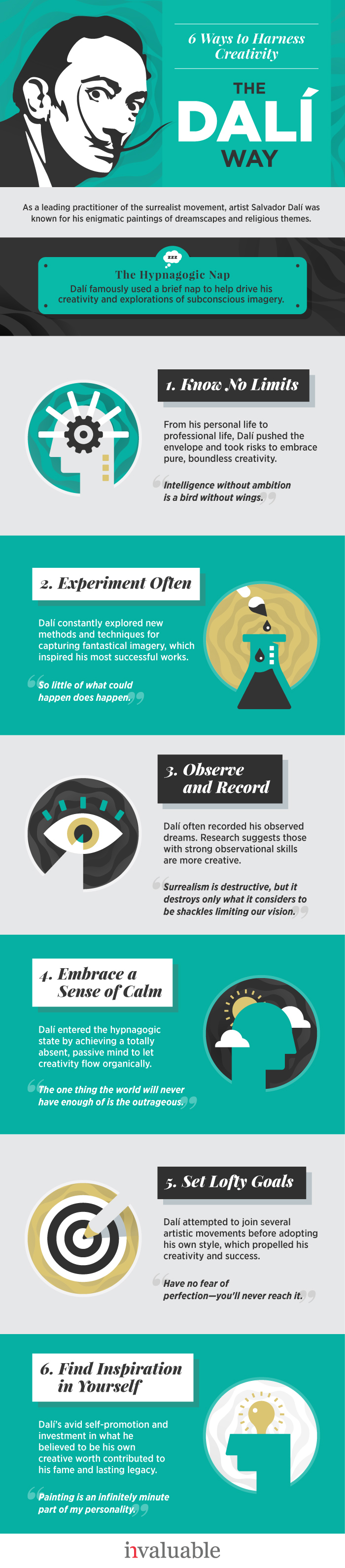
Six Ways to Harness Creativity like Salvador Dali [Infographic]


lightbulb-creativity

Creativity is an essential component of every industry, and businesses large and small can hone in on creative thinking to push their product or offering to new levels.

Creativity acts as a differentiator, giving companies an edge and means for innovation.

It’s the driving factor that fuels big ideas and challenges ways of thinking. So, how exactly do you foster creativity and get employees to think outside the box? Aside from rewarding creative ideas and allowing for flexible work environments, it’s important to gather ideas for creative thinking from some of the most iconic creatives to ever walk this earth.

Invaluable created a neat visual that discusses ways to harness creativity as Salvador Dali did. From experimenting often to investing in himself, there is much we can learn from the quirky yet brilliant artist. Gather inspiration from the visual below, and try new ways to unleash your creative thinking both at work and in life.

Dali

Feel free to share this post on social networks. This opinion article is for informational purposes only.

Follow my blog for more insightful articles: http://temitopeadelekan.com

Want to submit a blog post: Share a blog post

LinkedIn connect: Temitope Adelekan

Twitter: @taymethorpenj


Brought to you by Invaluable

Edited by Temitope Adelekan

A Complete Guide to Using Infographics for Lead Generation


snippet

It’s no secret that lead generation is an essential cocktail in ensuring that your business will take flight. If you’re reading this article, there’s a good chance you’re thinking that you’ve already exhausted all possible efforts in attracting high-quality prospects that your brand can easily convert, but you’re still looking for creative ways to push these efforts forward. Well then, you came to the right place.

Here’s a question to start the discussion: What comes to mind when you think of infographics? Some people would say stunning graphics of visuals; others would say it’s an excellent way to get engagement. Readers are usually captivated by this content type since it combines information and aesthetic. It’s a creative way to present data without overwhelming your audience.

Infographics are so valuable to content marketers because of its proven track record in increasing site traffic and tripling social media engagement. However, it’s not often associated with lead generation—a missed opportunity.

It’s time to change this! In the infographic below, you’ll discover that it’s possible to optimize your infographics so you can reap its benefits and get quality prospects for your business. Learn how to generate leads with infographics and get ahead of the competition.

A Complete Guide to Using Infographics for Lead Generation

Feel free to share on social networks. Find the buttons below this post. This opinion article is for informational purposes only.

Follow my blog for more insightful articles: http://temitopeadelekan.com

Want to submit a blog post: Share a blog post

LinkedIn connect: Temitope Adelekan

Twitter: @taymethorpenj


Brought to you by Spiralytics

Post submitted by Ushabelle Bongo – Popularly know as Shaw is a proud daughter of the Queen City of the South who has been hustling in Makati since 2016. She initially tried her hands at banking, only to be proven once and for all that her hands are made for playing with words, not handling numbers. Now Shaw is in a better place–a digital marketing paradise otherwise known as Spiralytics, where she’s making waves as a Content Specialist.

Edited by Temitope Adelekan