

How to Build a Career or Business Around Your Passion for Personal and Professional Fulfilment


Turning your passion into a career or business can be both exhilarating and daunting. It is not just about doing what you love – it is about aligning your interests with practical steps that create lasting satisfaction and impact. The journey requires introspection, experimentation, and perseverance, but it can yield personal and professional fulfilment when approached thoughtfully. Many struggle with knowing where to start or how to validate their ideas, leading to stagnation or frustration. By following a structured approach, you can transform your passion into a sustainable career or business.

Reflect on Your Core Values and Strengths

Before taking action, it is crucial to understand yourself deeply. Reflect on what matters most to you, the skills you excel at, and the areas where your passion naturally aligns with your strengths. This self-awareness helps ensure your pursuits are authentic and sustainable, rather than driven solely by external expectations or trends. Mapping your values against potential career or business paths can reveal opportunities that not only excite you but also fit your personality and work style. By anchoring your decisions in your core values, you create a foundation for long-term satisfaction and resilience. For instance, someone who values creativity and autonomy might realise they are best suited to freelance graphic design rather than a corporate marketing role.

Validate Your Passion with Market Demand

Passion is important, but it must intersect with real-world demand. Consider whether others would pay for or engage with what you love to do. Research potential markets, observe competitors, and see if there is a clear audience for your offering. This validation step prevents wasted effort and provides confidence that your efforts can produce tangible results. Testing small experiments or side projects can reveal early signals of viability, helping you adjust your approach before fully committing. A former teacher, for example, tested a tutoring side hustle online and quickly found a steady stream of clients, confirming strong demand before transitioning full-time.

Leverage Education to Accelerate Your Journey

Structured education can provide a powerful boost when transforming a passion into a viable career or business. By earning an MBA, you gain access to practical management, strategy, and leadership skills that complement hands-on experience. The curriculum also offers decision-making and problem-solving frameworks that directly apply to entrepreneurial or career pursuits. Beyond skills, an MBA program opens networking opportunities with peers, mentors, and industry experts who can accelerate growth. Explore job opportunities with an MBA to learn more. One aspiring entrepreneur used insights from an MBA capstone project to launch a niche fitness startup that now serves thousands of customers.

Develop Relevant Skills and Knowledge

Even when you are passionate, success requires mastery. Identify the skills and knowledge necessary to excel in your chosen field and make a plan to acquire them. Continuous learning – through courses, mentorship, or practical experience – ensures you remain competitive and capable of delivering real value. Building expertise also instils confidence, which is crucial when taking risks or entering unfamiliar territory. By committing to skill development, you increase both your marketability and the likelihood of long-term satisfaction. A hobbyist photographer, for example, began taking online lighting courses and quickly turned her side passion into a thriving portrait business.

Start Small and Scale Gradually

Launching a business or career based on passion does not require an immediate full-scale operation. Begin with manageable projects or pilot programs to test your ideas, gather feedback, and learn from experience. This approach allows you to iterate, refine your offering, and minimise risk. As confidence and understanding grow, you can scale gradually, expanding your reach and capabilities without overextending yourself. Incremental growth also gives you time to develop supporting systems, networks, and resources for long-term sustainability. A software engineer started by offering weekend coding workshops at local libraries before eventually opening a full-fledged online education platform.

Embrace Resilience and Adaptability

The journey will inevitably include setbacks, uncertainty, and moments of doubt. Cultivating resilience allows you to recover from failures without losing momentum, while adaptability ensures you can pivot when circumstances change. These qualities enable you to navigate shifting market conditions, feedback, and evolving personal priorities. Developing emotional intelligence, maintaining a growth mindset, and staying flexible are key strategies for sustaining energy and focus over the long term. Resilient, adaptable individuals are better equipped to turn challenges into opportunities. After her first café location closed during a downturn, one entrepreneur shifted to a mobile food truck model and found even greater success.

Seek Support and Build a Network

Even the most independent ventures benefit from connection. Mentors, peers, and collaborators can provide guidance, accountability, and encouragement. Networking opens doors to opportunities you might not find alone and allows you to learn from others’ experiences. Engage with communities in your field, attend events, and cultivate meaningful relationships. A strong support network helps you overcome obstacles and enriches your journey, offering perspectives that strengthen both personal growth and professional decision-making. One software founder credits their business growth to a weekly mastermind group that helped troubleshoot technical challenges and refine product strategy.

By taking a structured approach – reflecting on your values, validating your ideas, leveraging education, building relevant skills, starting small, embracing resilience, and seeking support – you can transform your passion into a career or business that is both fulfilling and sustainable. Each step strengthens your foundation, reduces risk, and increases the likelihood of achieving lasting satisfaction. Pursuing a passion-driven path is a marathon, not a sprint, but with patience, reflection, and deliberate action, it can become a profoundly rewarding journey.

Elevate your academic path with perspectives rooted in resilience, balance, and cultural awareness. Explore Knowledge Vault now and start transforming your learning journey through meaningful engagement.

Feel free to share this post on social networks.

Want to submit a blog post: Share a blog post

Twitter: @taymethorpenj

Brought to you by Gloria Martinez

Edited by Temitope Adelekan

The Art of Failing: The Importance of Embracing Failure and Trying Again


We have all heard the phrase “failure is not an option,” but in reality, failure is not only an option but also a necessary part of success. That’s right! Failure is not the antithesis of success; rather, it is a pathway to success. In today’s society, failure is often seen as a negative thing. From a young age, we are conditioned to avoid failure at all costs, and those who experience failure are often stigmatised as incompetent or inadequate. But what if we approached failure differently? What if we saw it as an opportunity to learn, grow, and try again? As Noonan (2019) indicated, experiencing failure is a normal aspect of life and is crucial for achieving success if accepted. Noonan’s work provides reassurance and confidence in embracing failure as a path to success.

The concept of embracing failure and trying again is based on the growth mindset theory developed by Carol Dweck, a psychology professor at Stanford University. According to Dweck, individuals with a growth mindset believe that their abilities can be developed and improved through hard work and dedication. They see failure as an opportunity to learn and grow, rather than a reflection of their intelligence or abilities. Studies have shown that individuals with a growth mindset are more likely to persevere through challenges and achieve their goals. They are less likely to give up after a setback or a failure and are more likely to try again and learn from their mistakes.

Furthermore, embracing failure and trying again can lead to creative breakthroughs and innovation. In his book, “The Myths of Innovation,” author Scott Berkun argues that many great inventions and discoveries were the result of multiple failures and iterations. Thomas Edison, for example, famously said, “I have not failed. I’ve just found 10,000 ways that won’t work,” referring to his numerous attempts to invent the light bulb. J.K. Rowling: The author of the wildly popular Harry Potter series faced rejection after rejection from publishers before finally landing a book deal. She could have given up after the first few rejections, but instead, she kept trying until she found success. Another great example is Michael Jordan: Considered one of the greatest basketball players of all time, Jordan was cut from his high school basketball team. Instead of letting this failure discourage him, he used it as motivation to work harder and improve his skills. How about Abraham Lincoln? Before becoming one of America’s most beloved presidents, Lincoln failed at several business ventures and lost numerous elections. Despite these setbacks, he never gave up and eventually found his way to the White House.

So, what am I trying to communicate: the importance of embracing failure and trying again cannot be overstated. Failure is not the opposite of success; it is a necessary part of the journey. When we approach failure with a growth mindset, we become more resilient, more determined, and more likely to achieve our goals. Therefore, the next time you experience a setback or a failure, remember Thomas’s, Harry’s, Michael’s, and Abraham’s stories. Don’t give up. Instead, use the experience as a learning opportunity and try again.

Remember, failure is not the end of the road; it’s an opportunity to try again, learn from our mistakes, and grow. Best wishes

Feel free to share this post on social networks.

Follow my blog for more insightful articles: http://temitopeadelekan.com

Want to submit a blog post: Share a blog post

Twitter: @taymethorpenj

Edited by Temitope Adelekan

Reference: Noonan, D. (2019). Failure found to be an essential prerequisite for success. Scientific American.

A Pathway for Aspiring Entrepreneurs to Lay a Strong Foundation for Success


Venturing into entrepreneurship offers an exhilarating journey, requiring careful consideration and thorough preparation. This guide explores essential steps to help you identify the ideal business, empowering you to make informed decisions and lay a solid foundation for success. By following these critical steps from Temitope Adelekan, you’ll be equipped to navigate the complexities of entrepreneurship with confidence and clarity, setting the stage for triumph in your endeavours. Embrace the journey ahead with enthusiasm and dedication as you embark on this exciting path of entrepreneurship.

Aligning with Your Passions

Identifying a business that resonates with your personal interests and passions is vital. Engaging in a field you are deeply passionate about ensures that you find joy and fulfilment in your endeavours. This alignment significantly boosts your determination to overcome obstacles, sustaining your drive during challenging periods. Your enthusiasm for your work will be evident, attracting customers and inspiring your team, thereby laying the groundwork for a thriving business.

Crafting a Strategic Plan

The essence of a successful venture lies in a thorough business plan that sketches out your goals, identifies your target audience, evaluates competitors, formulates marketing strategies, and projects financial outcomes. This plan acts as your venture’s compass, steering your decisions and facilitating investment acquisition. It allows you to anticipate and prepare for any business scenario, ensuring a steady course toward your objectives.

Establishing Contingency Strategies

Preparing for unforeseen challenges is a hallmark of a prudent entrepreneur. By identifying potential threats to your business and devising strategies to counter them, you ensure your venture’s resilience. These contingency plans equip you to handle unexpected situations with poise, ensuring the longevity and stability of your business in the face of adversity.

Laying Financial Groundwork

Ensuring your business’s financial health is crucial for its success, with adequate capital as a key pillar. Your credit score plays a vital role in accessing diverse financing options, making it essential to aim for a high score to secure loans on favourable terms. Achieving financial readiness allows you to fuel your business’s expansion and easily tackle monetary hurdles. This foundation sets the stage for sustainable growth and financial stability.

Setting Attainable Goals

Setting goals is essential for guiding your business’s direction and fostering its growth. Establishing clear and achievable objectives, then breaking them into actionable steps, allows for effective progress monitoring and keeps your venture on course. This systematic approach ensures you stay focused on your business vision, driving you toward your goals with clarity and determination. By adhering to this process, you maintain momentum and steadily advance toward success.

Fostering Industry Relationships

Cultivating connections within your industry is instrumental in accelerating your business’s growth. Engaging in networking events, conferences, and online communities opens doors to valuable insights, mentorship, and collaborative opportunities. These relationships can be a source of support, advice, and partnerships, enriching your entrepreneurial journey with diverse perspectives and experiences.

Trusting Your Intuition

In business decision-making, relying on data and thorough analysis is crucial, but your gut instinct often provides invaluable insights. Your intuition may uncover innovative ideas and opportunities that conventional data overlooks, serving as a vital tool for differentiation in a competitive market. Trusting this inner voice empowers you to foster innovation and make confident decisions even in complex situations. Embracing your intuition can lead to strategic advantages and propel your business forward.

Choosing the ideal business demands thoughtful consideration, detailed planning, and a willingness to face risks with an open mind. By following critical steps carefully, you place yourself on a path to entrepreneurship filled with purpose and clear direction. Trust your abilities and remain flexible in your approach, ensuring your journey is rewarding and successful. Keep your objectives in clear view, guiding every decision you make. This approach empowers you to thrive in the dynamic and exhilarating realm of entrepreneurship.

Feel free to share this post on social networks.

Follow my blog for more insightful articles: http://temitopeadelekan.com

Want to submit a blog post: Share a blog post

Twitter: @taymethorpenj

Brought to you by Justin Wigg

Edited by Temitope Adelekan

3 Ways for Small Business Owners To Improve Company-Wide Collaboration


Read more engaging articles on the Knowledge Vault today!

If you own a small business, you’re keenly aware of every employee’s role in your enterprise. What may be missing, though, are the significant gains that come from group efforts. Consider these ideas from Knowledge Vault for transforming your company culture into one where everyone works separately (or even remotely) to one that shifts from solo work to collaborative work with ease.

1. Foster a Pro-Communication Culture

It should go without saying that if you want your employees to feel comfortable sharing ideas and offering constructive critiques, you should foster an environment of open communication, non-judgmental discourse, and respect. Positivity begins with the business owners and leaders, but it’s also reinforced by your meetings, training, company policies, and feedback you give to your employees.

If your employees work in the office, do your best to create a comfortable physical environment. If your employees are remote-only or hybrid teams, ensure that they have what they need to thrive including proper office equipment and a way to communicate with everyone. This could include Slack or another popular workplace messenger app to ensure that no one gets left out of a discussion.

It’s also important that you and your team are open to hear difficult feedback from coworkers, including points like, they don’t feel heard, are not comfortable with one another, or simply don’t trust each other. You cannot address problems if you don’t know they exist, so this kind of open communication is vital, even if it is painful. Ask one another how you can gain each other’s trust, and own up to your mistakes. Never make excuses.

2. Consider Your Collaborative Platforms

The fact that life has increasingly moved online in the past decade has increased the need for high-quality virtual platforms and messaging systems. Consider the size of your entire company as well as the usual number of people in your collaborative teams to determine which platforms will suit your business.

Here are a few options that are especially suited to remote or hybrid work:

  • Zoom: you likely know and love (or hate!) this virtual meeting platform. Video calls are necessary in the age of remote work, and they can often save an employee who has to stay home with a sick child or care for an aging relative.
  • Slack: this app is essential for day-to-day communication with your office staff as well as for collaborative efforts in smaller teams. 
  • Trello: make project management easier by using a visual board to envision everyone’s duties and due dates. Everyone is able to see their personal to-do list and understand where the project is in terms of completion.
  • Workfront: collaborate in real time with this project management software that also comes with some handy automation features.

3. Keep Your Project Teams Small

LinkedIn reports that creating teams of over 15 individuals (although 10 is better) can decrease employees’ motivation to collaborate and work as a group. Too-large groups result in a few hardworking employees assigning duties to the rest of the group and picking up slack. It may also cause a phenomenon where some employees render themselves invisible by not communicating or offering any input — and letting others do the heavy lifting for them.

Make it a point to split large teams into small groups. In groups of three to eight, your employees have more incentive to speak up and work with their teammates. The Art of Teamwork recommends assigning five or six employees to a collaborative team. Employees may feel more comfortable collaborating and expressing their thoughts when working in smaller groups as well.

Finally, take the time to cultivate healthy communication practices. Company culture isn’t invented overnight. It takes time to build, and it takes into account your employees’ personalities, your leadership style, and your vision for the future. If you feel that your business isn’t as collaborative as you had wished it would be, use the tips listed here to adjust to a culture that works for everyone.

Feel free to share this post on social networks. This opinion article is for informational purposes only.

Follow my blog for more insightful articles: http://temitopeadelekan.com

Want to submit a blog post: Share a blog post

Twitter: @taymethorpenj

Brought to you by Lisa Walker

Edited by Temitope Adelekan

How to remodel a store to boost sales


StoreRemodel1

In a time where more and more consumers conduct the majority of their shopping online, brick-and-mortar stores need to exploit their advantages. Physical stores can offer a cohesive branding and shopping experience that eCommerce simply can’t.

Of course, brick-and-mortar stores can’t beat the convenience of ordering products online, but they don’t have to. Consumers visit physical stores for the entire experience, rather than just buying an item. Small businesses should cater to this desire to boost sales.

Remodeling your store can be quite the undertaking, however, it will propel your brand forward and raise your bottom line. From colors to floorplans, create an enticing customer journey that will drive purchases. Learn how with the visual below:

StoreRemodel

Feel free to share on social networks. Find the buttons below this post. This opinion article is for informational purposes only.

Follow my blog for more insightful articles: http://temitopeadelekan.com

Want to submit a blog post: Share a blog post

LinkedIn connect: Temitope Adelekan

Twitter: @taymethorpenj


Brought to you by Bigrentz

Edited by Temitope Adelekan

How to become an industry disruptor: Lessons from Transportation Startups


transportation-icons-car-automobile-drive-wheels-road
Nowadays it seems like Lyft, Bird Scooters, and other new innovative rideshare services are everywhere. These new services are called “industry disruptors” because they force an entire industry to change. Think about how Lyft for instance changed the taxi industry, and how the taxi industry pushed back at first, and then eventually adapted and you’ll understand what this means. These changes have even impacted total car sales, with vehicle sales slowly declining over the years. Of course, people will always own cars, but that doesn’t mean that major corporations and car companies have to adapt to the way people are changing how they think about rideshare services.
In our infographic below, we break down startups on the rise like Bird and Waymo and their impact as an industry disruptor. This visual examines the funding of these automotive-fueled industries (even including scooters), as well as how they’re all interconnected, whether it’s by one major company funding a new startup like Waymo or Lime. And it’s not just with new startups, but some of the earlier ones too. For example, both Ford and GM backed Lyft, which in total has received $4.9 billion in funding, a sign at how even these major companies have to adapt to these changes!
becoming_an_industry_disruptor_infographic_1.width-800

Feel free to share on social networks. Find the buttons below this post. This opinion article is for informational purposes only.

Follow my blog for more insightful articles: http://temitopeadelekan.com

Want to submit a blog post: Share a blog post

LinkedIn connect: Temitope Adelekan

Twitter: @taymethorpenj


Brought to you by The Zebra

Post submitted by Emma Welsh

Edited by Temitope Adelekan

A Complete Guide to Using Infographics for Lead Generation


snippet

It’s no secret that lead generation is an essential cocktail in ensuring that your business will take flight. If you’re reading this article, there’s a good chance you’re thinking that you’ve already exhausted all possible efforts in attracting high-quality prospects that your brand can easily convert, but you’re still looking for creative ways to push these efforts forward. Well then, you came to the right place.

Here’s a question to start the discussion: What comes to mind when you think of infographics? Some people would say stunning graphics of visuals; others would say it’s an excellent way to get engagement. Readers are usually captivated by this content type since it combines information and aesthetic. It’s a creative way to present data without overwhelming your audience.

Infographics are so valuable to content marketers because of its proven track record in increasing site traffic and tripling social media engagement. However, it’s not often associated with lead generation—a missed opportunity.

It’s time to change this! In the infographic below, you’ll discover that it’s possible to optimize your infographics so you can reap its benefits and get quality prospects for your business. Learn how to generate leads with infographics and get ahead of the competition.

A Complete Guide to Using Infographics for Lead Generation

Feel free to share on social networks. Find the buttons below this post. This opinion article is for informational purposes only.

Follow my blog for more insightful articles: http://temitopeadelekan.com

Want to submit a blog post: Share a blog post

LinkedIn connect: Temitope Adelekan

Twitter: @taymethorpenj


Brought to you by Spiralytics

Post submitted by Ushabelle Bongo – Popularly know as Shaw is a proud daughter of the Queen City of the South who has been hustling in Makati since 2016. She initially tried her hands at banking, only to be proven once and for all that her hands are made for playing with words, not handling numbers. Now Shaw is in a better place–a digital marketing paradise otherwise known as Spiralytics, where she’s making waves as a Content Specialist.

Edited by Temitope Adelekan

Succession Planning for Small Business Owners [Infographic]


planning

Succession planning is an aspect of long-term business planning that many small business owners often neglect. In most cases, entrepreneurs are so absorbed in running their business that they fail to consider to whom, how, or when they should pass their business on.

Unfortunately, many businesses fail because they do not properly plan for the future. In fact, 70% of family businesses do not survive into the next generation due to a lack of adequately preparing a successor. So, how exactly do you begin the process of succession planning?

Here are a few considerations to keep in mind:

  • Identify a successor early on. If you have a candidate in mind, be it a family member, business partner, or an ideal employee, make sure you create a training and development plan, so they are equipped to lead in your stead when you leave.
  • Determine how to distribute your property. Once you leave, be it by design or circumstance, you will need to state in your plan clearly how your business interests are to be divided. Will the wealth pass on to your family, or be reinvested into your business?
  • Address outstanding debts and taxes. You should resolve any unfinished business in your succession plan as well. Essentially, you should leave clear instructions as to how your company should handle any fees or taxes once you’re gone.
  • Consult a lawyer. To make sure your succession plan is legally binding and adheres to regulations, you should talk to a legal expert.

To learn more about succession planning, like how to write one or how the benefits of structuring a plan, check out the infographic below:

business-succession-infographic

Feel free to share on social networks. Find the buttons below this post. This opinion article is for informational purposes only.

Follow my blog for more insightful articles: http://temitopeadelekan.com

Want to submit a blog post: Share a blog post

LinkedIn connect: Temitope Adelekan

Twitter: @taymethorpenj


Brought to you by Bestow

Post submitted by Zach Painter

Edited by Temitope Adelekan

What Your Desk Setup Says About You (Infographic)


www.temitopeadelekan.com

Building rapport with your coworkers can be essential to working productively and tackling team projects with ease. However, since our workdays are often filled with meetings, assignments, and calls, it can be challenging to make time to get to know your coworkers over lunch or a coffee break. While it’s a good idea to pay attention to the subtle ways your colleagues are communicating in conversation and nonverbally, there is another way to get to know your coworkers, just by looking at their desks.

Since so many hours of the day are spent at a desk, it’s unsurprising that they can grow to reflect the person who occupies them. Things like photographs of kids and spouses can indicate they are family-oriented, while pictures of their various travels can hint at an adventurous side. While these can spark a conversation on their own, they can also give you insight on how to work with them. For example, you may not want to send any emails to the family-oriented coworker after hours. Or, if you need some new out-there ideas for a brainstorm, ask the person with a picture of themselves hiking a mountain.

Whether you already have a great relationship with your coworkers or just starting a new job, there are insights their (workers) desks can tell you that they may never think to say to you themselves. All you have to do is decode them. To help you with translating what these desks mean, Fundera created this infographic that covers what their desks say about you and your coworkers:

what-your-desk-setup-says-about-you1

Feel free to share on social networks. Find the buttons below this post. This opinion article is for informational purposes only.

Remember, information/knowledge acquisition can never be too much! Let us continue to spread the word!

Follow my blog for more insightful articles: http://temitopeadelekan.com

LinkedIn connect: Temitope Adelekan

Twitter: @taymethorpenj


Brought to you by Fundera

Post submitted by Brigid Ludwig

Edited by Temitope Adelekan
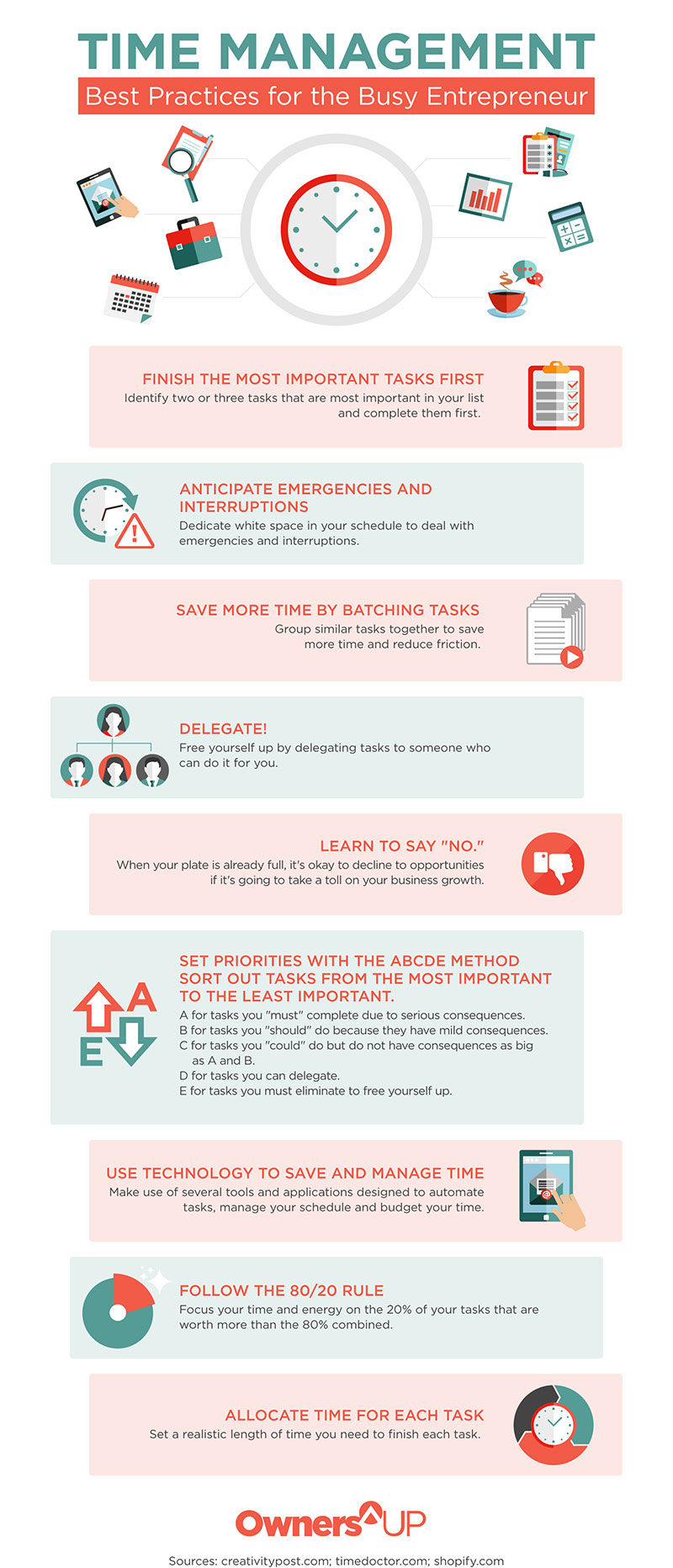
Time Management Best Practices for the Busy Entrepreneur


Time Management Tips

Time management is an essential skill to master – whether at home or work. People always want to get things done so they can rest more comfortable when everything is over.

Questions such as where to start from, when to start, or how to start are some of the issues people face on a daily basis in the quest of finding/learning how to manage time effectively.

That said, there are some smart insights you can follow to solve the highlighted questions.

Learning this skill takes time, but following the necessary steps would ensure you acquire them. Some of the steps you should consider is learning to say ‘no’ when you have a lot on your plate already instead of jumping at every opportunity that is knocking at you. You have to be smart when it comes to what you accept and decline. Another point worth mentioning that is relating to the topic under discussion is delegation. It is imperative that a person knows how to delegate when the situation is overwhelming, this way, a person can keep tasks going without any hiccups.

These are some of the things you can take to heart and start mulling over. To know more about the best practices on time management, check out this infographic below:

Time Management Best Practices

Feel free to share on social networks. Find the buttons below this post. This opinion article is for informational purposes only.

Remember, information/knowledge acquisition can never be too much! Let us continue to spread the word!

Follow my blog for more insightful articles: http://temitopeadelekan.com

LinkedIn connect: Temitope Adelekan

Twitter: @taymethorpenj


Brought to you by our friend at the Owners Up

Post submitted by Tanya Alvarez

Edited by Temitope Adelekan