
How to Build a Career or Business Around Your Passion for Personal and Professional Fulfilment


Turning your passion into a career or business can be both exhilarating and daunting. It is not just about doing what you love – it is about aligning your interests with practical steps that create lasting satisfaction and impact. The journey requires introspection, experimentation, and perseverance, but it can yield personal and professional fulfilment when approached thoughtfully. Many struggle with knowing where to start or how to validate their ideas, leading to stagnation or frustration. By following a structured approach, you can transform your passion into a sustainable career or business.

Reflect on Your Core Values and Strengths

Before taking action, it is crucial to understand yourself deeply. Reflect on what matters most to you, the skills you excel at, and the areas where your passion naturally aligns with your strengths. This self-awareness helps ensure your pursuits are authentic and sustainable, rather than driven solely by external expectations or trends. Mapping your values against potential career or business paths can reveal opportunities that not only excite you but also fit your personality and work style. By anchoring your decisions in your core values, you create a foundation for long-term satisfaction and resilience. For instance, someone who values creativity and autonomy might realise they are best suited to freelance graphic design rather than a corporate marketing role.

Validate Your Passion with Market Demand

Passion is important, but it must intersect with real-world demand. Consider whether others would pay for or engage with what you love to do. Research potential markets, observe competitors, and see if there is a clear audience for your offering. This validation step prevents wasted effort and provides confidence that your efforts can produce tangible results. Testing small experiments or side projects can reveal early signals of viability, helping you adjust your approach before fully committing. A former teacher, for example, tested a tutoring side hustle online and quickly found a steady stream of clients, confirming strong demand before transitioning full-time.

Leverage Education to Accelerate Your Journey

Structured education can provide a powerful boost when transforming a passion into a viable career or business. By earning an MBA, you gain access to practical management, strategy, and leadership skills that complement hands-on experience. The curriculum also offers decision-making and problem-solving frameworks that directly apply to entrepreneurial or career pursuits. Beyond skills, an MBA program opens networking opportunities with peers, mentors, and industry experts who can accelerate growth. Explore job opportunities with an MBA to learn more. One aspiring entrepreneur used insights from an MBA capstone project to launch a niche fitness startup that now serves thousands of customers.

Develop Relevant Skills and Knowledge

Even when you are passionate, success requires mastery. Identify the skills and knowledge necessary to excel in your chosen field and make a plan to acquire them. Continuous learning – through courses, mentorship, or practical experience – ensures you remain competitive and capable of delivering real value. Building expertise also instils confidence, which is crucial when taking risks or entering unfamiliar territory. By committing to skill development, you increase both your marketability and the likelihood of long-term satisfaction. A hobbyist photographer, for example, began taking online lighting courses and quickly turned her side passion into a thriving portrait business.

Start Small and Scale Gradually

Launching a business or career based on passion does not require an immediate full-scale operation. Begin with manageable projects or pilot programs to test your ideas, gather feedback, and learn from experience. This approach allows you to iterate, refine your offering, and minimise risk. As confidence and understanding grow, you can scale gradually, expanding your reach and capabilities without overextending yourself. Incremental growth also gives you time to develop supporting systems, networks, and resources for long-term sustainability. A software engineer started by offering weekend coding workshops at local libraries before eventually opening a full-fledged online education platform.

Embrace Resilience and Adaptability

The journey will inevitably include setbacks, uncertainty, and moments of doubt. Cultivating resilience allows you to recover from failures without losing momentum, while adaptability ensures you can pivot when circumstances change. These qualities enable you to navigate shifting market conditions, feedback, and evolving personal priorities. Developing emotional intelligence, maintaining a growth mindset, and staying flexible are key strategies for sustaining energy and focus over the long term. Resilient, adaptable individuals are better equipped to turn challenges into opportunities. After her first café location closed during a downturn, one entrepreneur shifted to a mobile food truck model and found even greater success.

Seek Support and Build a Network

Even the most independent ventures benefit from connection. Mentors, peers, and collaborators can provide guidance, accountability, and encouragement. Networking opens doors to opportunities you might not find alone and allows you to learn from others’ experiences. Engage with communities in your field, attend events, and cultivate meaningful relationships. A strong support network helps you overcome obstacles and enriches your journey, offering perspectives that strengthen both personal growth and professional decision-making. One software founder credits their business growth to a weekly mastermind group that helped troubleshoot technical challenges and refine product strategy.

By taking a structured approach – reflecting on your values, validating your ideas, leveraging education, building relevant skills, starting small, embracing resilience, and seeking support – you can transform your passion into a career or business that is both fulfilling and sustainable. Each step strengthens your foundation, reduces risk, and increases the likelihood of achieving lasting satisfaction. Pursuing a passion-driven path is a marathon, not a sprint, but with patience, reflection, and deliberate action, it can become a profoundly rewarding journey.

Elevate your academic path with perspectives rooted in resilience, balance, and cultural awareness. Explore Knowledge Vault now and start transforming your learning journey through meaningful engagement.

Feel free to share this post on social networks.

Want to submit a blog post: Share a blog post

Twitter: @taymethorpenj

Brought to you by Gloria Martinez

Edited by Temitope Adelekan

The Art of Failing: The Importance of Embracing Failure and Trying Again


We have all heard the phrase “failure is not an option,” but in reality, failure is not only an option but also a necessary part of success. That’s right! Failure is not the antithesis of success; rather, it is a pathway to success. In today’s society, failure is often seen as a negative thing. From a young age, we are conditioned to avoid failure at all costs, and those who experience failure are often stigmatised as incompetent or inadequate. But what if we approached failure differently? What if we saw it as an opportunity to learn, grow, and try again? As Noonan (2019) indicated, experiencing failure is a normal aspect of life and is crucial for achieving success if accepted. Noonan’s work provides reassurance and confidence in embracing failure as a path to success.

The concept of embracing failure and trying again is based on the growth mindset theory developed by Carol Dweck, a psychology professor at Stanford University. According to Dweck, individuals with a growth mindset believe that their abilities can be developed and improved through hard work and dedication. They see failure as an opportunity to learn and grow, rather than a reflection of their intelligence or abilities. Studies have shown that individuals with a growth mindset are more likely to persevere through challenges and achieve their goals. They are less likely to give up after a setback or a failure and are more likely to try again and learn from their mistakes.

Furthermore, embracing failure and trying again can lead to creative breakthroughs and innovation. In his book, “The Myths of Innovation,” author Scott Berkun argues that many great inventions and discoveries were the result of multiple failures and iterations. Thomas Edison, for example, famously said, “I have not failed. I’ve just found 10,000 ways that won’t work,” referring to his numerous attempts to invent the light bulb. J.K. Rowling: The author of the wildly popular Harry Potter series faced rejection after rejection from publishers before finally landing a book deal. She could have given up after the first few rejections, but instead, she kept trying until she found success. Another great example is Michael Jordan: Considered one of the greatest basketball players of all time, Jordan was cut from his high school basketball team. Instead of letting this failure discourage him, he used it as motivation to work harder and improve his skills. How about Abraham Lincoln? Before becoming one of America’s most beloved presidents, Lincoln failed at several business ventures and lost numerous elections. Despite these setbacks, he never gave up and eventually found his way to the White House.

So, what am I trying to communicate: the importance of embracing failure and trying again cannot be overstated. Failure is not the opposite of success; it is a necessary part of the journey. When we approach failure with a growth mindset, we become more resilient, more determined, and more likely to achieve our goals. Therefore, the next time you experience a setback or a failure, remember Thomas’s, Harry’s, Michael’s, and Abraham’s stories. Don’t give up. Instead, use the experience as a learning opportunity and try again.

Remember, failure is not the end of the road; it’s an opportunity to try again, learn from our mistakes, and grow. Best wishes

Feel free to share this post on social networks.

Follow my blog for more insightful articles: http://temitopeadelekan.com

Want to submit a blog post: Share a blog post

Twitter: @taymethorpenj

Edited by Temitope Adelekan

Reference: Noonan, D. (2019). Failure found to be an essential prerequisite for success. Scientific American.

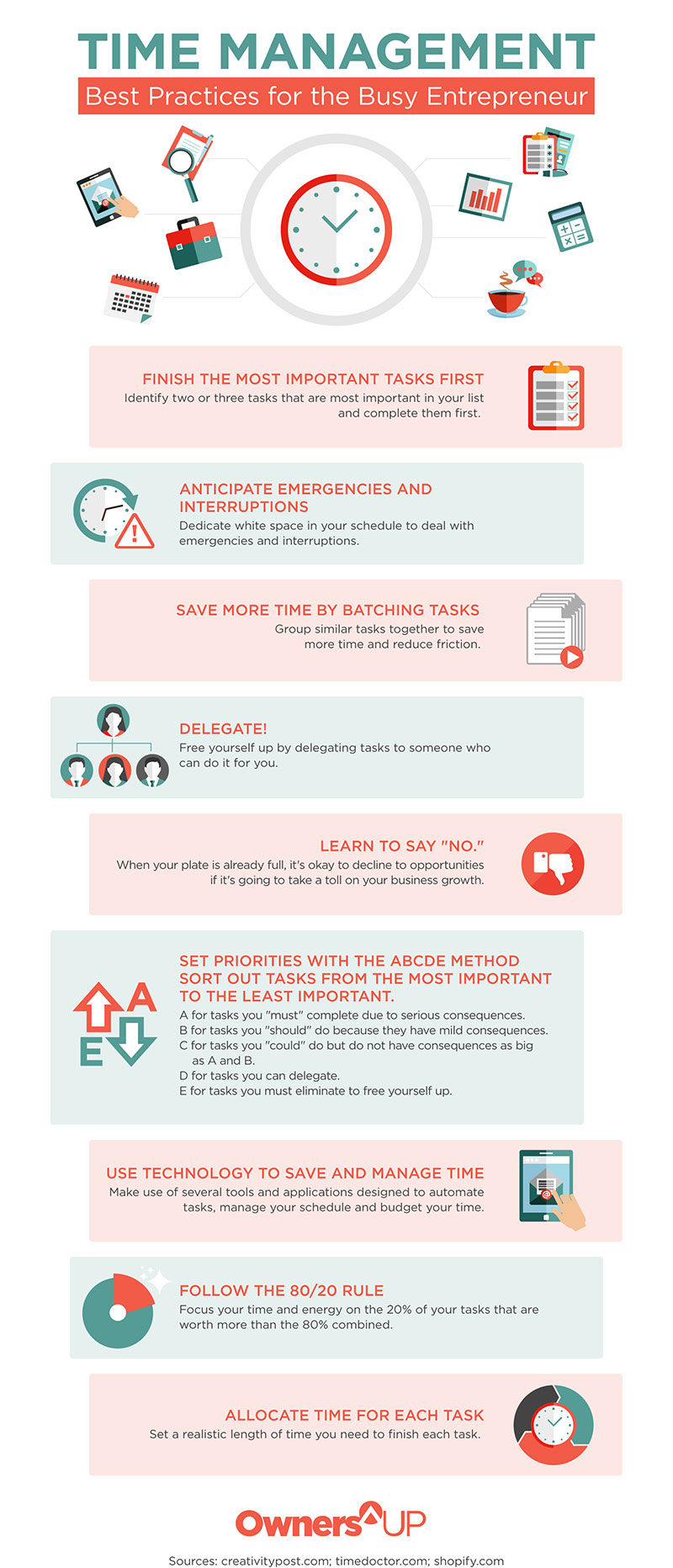
Time Management Best Practices for the Busy Entrepreneur


Time Management Tips

Time management is an essential skill to master – whether at home or work. People always want to get things done so they can rest more comfortable when everything is over.

Questions such as where to start from, when to start, or how to start are some of the issues people face on a daily basis in the quest of finding/learning how to manage time effectively.

That said, there are some smart insights you can follow to solve the highlighted questions.

Learning this skill takes time, but following the necessary steps would ensure you acquire them. Some of the steps you should consider is learning to say ‘no’ when you have a lot on your plate already instead of jumping at every opportunity that is knocking at you. You have to be smart when it comes to what you accept and decline. Another point worth mentioning that is relating to the topic under discussion is delegation. It is imperative that a person knows how to delegate when the situation is overwhelming, this way, a person can keep tasks going without any hiccups.

These are some of the things you can take to heart and start mulling over. To know more about the best practices on time management, check out this infographic below:

Time Management Best Practices

Feel free to share on social networks. Find the buttons below this post. This opinion article is for informational purposes only.

Remember, information/knowledge acquisition can never be too much! Let us continue to spread the word!

Follow my blog for more insightful articles: http://temitopeadelekan.com

LinkedIn connect: Temitope Adelekan

Twitter: @taymethorpenj


Brought to you by our friend at the Owners Up

Post submitted by Tanya Alvarez

Edited by Temitope Adelekan

Four Pillars of Brainstorming


1 OaUjtxIFdNuUCFA4D-IyHw

Whether you love brainstorming or feel intimidated by the process, it’s always great to brush up on your idea generation skills. Coming up with creative ideas on demand is no easy feat, but implementing tried and true brainstorming best practices can help make the process easier. If you’re feeling stuck during a brainstorm, consider implementing the four pillars of brainstorming, a framework created by advertiser Alex F. Osborn in the 1940s. Alex F. Osborn created the term “brainstorm” and developed four pillars that you can use when coming up with new ideas.

By going for quality, withholding criticism, welcoming wild ideas, and combining and improving ideas, you can radically transform the success of your brainstorming sessions. Check out the infographic below from our friends at Fundera that outlines the four pillars and provides actionable tips to improve idea generation. Feel free to add your suggestions in the comment box below.

Brainstorming-ideas-infographic

Feel free to share on social networks. Find the buttons below this post. This opinion article is for informational purposes only.

Remember, information/knowledge acquisition can never be too much! Let us continue to spread the word!

Follow my blog for more insightful articles: http://temitopeadelekan.com

LinkedIn connect: Temitope Adelekan

Twitter: @taymethorpenj


Brought to you by Fundera

Edited by Temitope Adelekan

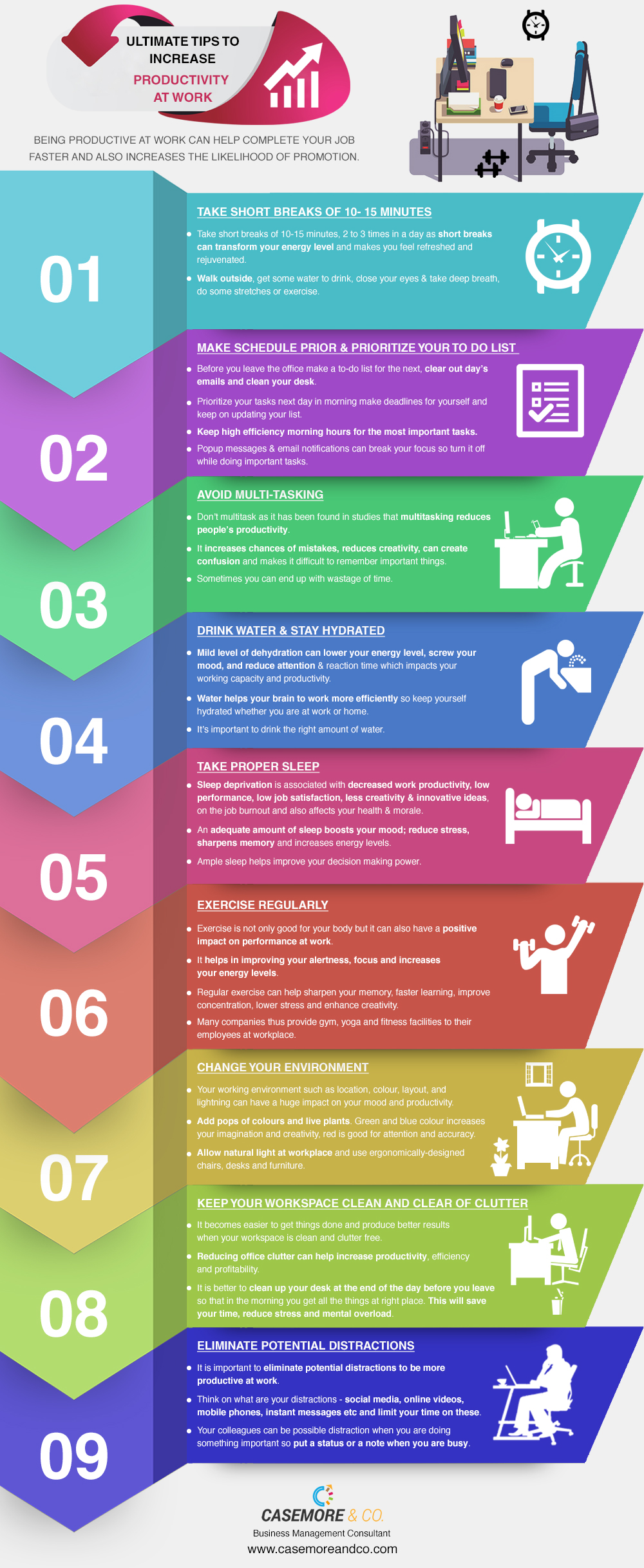
9 Ultimate Tips To Increase Productivity At Work – INFOGRAPHIC


16898250063_d158f6527b_b

In your workplace, there is always someone you are influencing indirectly either in a way that is good or the other way. So therefore, leaders of organisations pay attention to their employees more than ever before. Leaders mentor their followers passionately and constantly, work towards creating a happier workplace for employees to carry out their duties every single day. This act can be seen as one of the ways to boost the morale of employees’ positively in order to affect the ROI aside other organisational goals.

As leaders of organisations, our focus should be about how to empower, how to maximise employee’s potentials and also, to make their lives easier by equipping them with the right information needed day in day out. If and when we can practise these little things religiously, then we can be rest assured of achieving our desired organisational mission, vision and growth. Below are 9 ultimate tips to help employees’ increase their productivity at work.

ultimate-tips-to-increase-productivity-at-work

Click here for a bolder image

Thanks for taking out time to read through. Feel free to share on social networks (social networks sharing buttons below – Share with love), drop your suggestions below or contributions.

Follow my Blog: http://temitopeadelekan.com

LinkedIn connect: Temitope Adelekan

Twitter: @taymethorpenj


Infographic Source:CASEMORE & CO

Procrastination, motivational quotes and 15 ways to overcome the habit (Infographic).


13908968402_a9d6fb3dd8_o_d

“Our goals can only be reached through a vehicle of a PLAN, in which we must fervently BELIEVE, and upon which we must vigorously ACT. There is no other route to SUCCESS” – Pablo Picasso

Beginning of every year, we tend to plan our year in advance by penning down what to be achieved. No doubt, this is the best way to start the year. I started this year with loads of goals to achieve in 2016 likewise some of us too. One habit is known to be human beings greatest challenge in achieving their individual goals and the earlier the better you tackle this, or you might have moved deeper into the year before realizing you haven’t achieve any of the goals.

This habit is called PROCRASTINATION. This is known to be a psychological behaviour that affects people to some degree or another. It is also a goal destroyer, a dream killer if not controlled or worked on, it leaves us with guilt, stress, inadequacy, self-disgust or depression. For most of us whenever there’s a goal or task that needs to be done either big or small, important or irrelevant, we answer by saying “I will attend or start later “or rather “postpone it till next day”. This is an habit that should be shun and cast out of our daily lives if we are to ever accomplish our set goals either personally or at our place of work.

Below are 12 powerful procrastination quotes to motivate you & 15 ways to help you overcome procrastination (infographic). So, wake up from your slumber, re-visit those goals or tasks and start work on them right away. Remember, if you don’t start, you wont know that you can. We all can only if we believe and courageous enough to start now. The quotes:

  • “My advice is to never do tomorrow what you can do today. Procrastination is the thief of time.” – Charles Dickens
  • “A year from now you may wish you had started today.” – Karen Lamb
  • “Don’t wait. The time will never be just right.” – Napoleon Hill
  • “You cannot escape the responsibility of tomorrow by evading it today.” – Abraham Lincoln
  • “The two rules of procrastination: 1) Do it today. 2) Tomorrow will be today tomorrow.” – Unknown
  • “What may be done at any time will be done at no time.” – Scottish Proverb
  • “The best way to get something done is to begin.” – Unknown
  • “Whatever you want to do, do it now! There are only so many tomorrows.” – Michael Landon
  • “Procrastination is like a credit card: It’s a lot of fun until you get the bill.” – Christopher Parker
  • “You don’t have to see the whole staircase, just take the first step.” – Martin Luther King
  • “The perfect time to start something never arrives, so therefore, start now.” – Unknown
  • Begin while others are procrastinating. Work while others are wishing.” – William Arthur Ward

I hope you find the quotes useful. Here are 15 ways you can overcome procrastination.

1417534655-15-ways-overcome-procrastination-get-stuff-done-infographic

Remember, information/knowledge is never enough. Let us spread the word!

Thanks for taking out time to read through. Feel free to share, drop your suggestions or contributions.

Follow my Blog: http://temitopeadelekan.com

LinkedIn connect: Temitope Adelekan

Twitter: @taymethorpenj


Infographic Source: Essay.Expert